
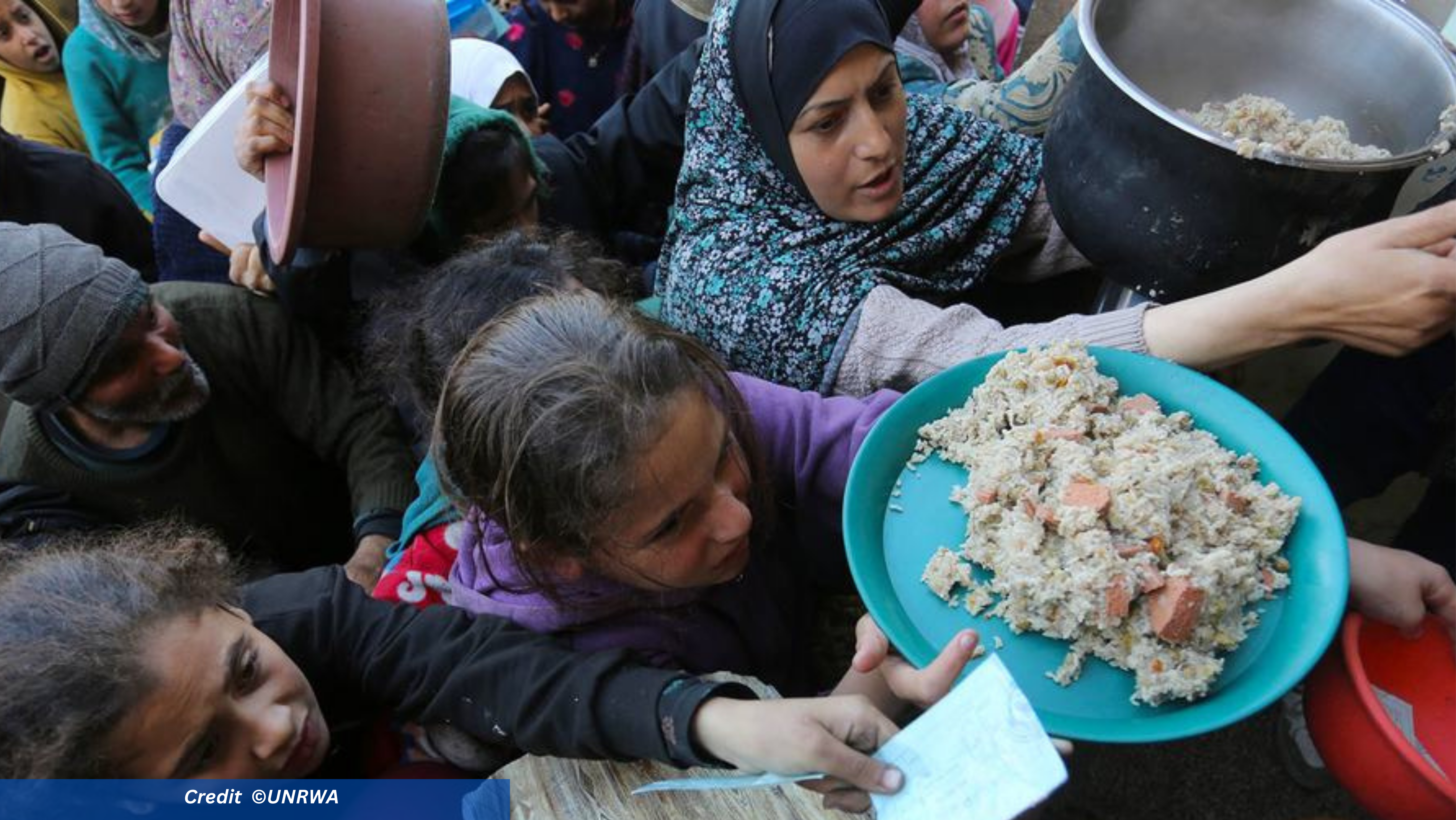
Rome, Italy, 5 June 2026 – Three months after warning that the escalating Middle East crisis could push millions more people into hunger, new analysis from the United Nations World Food Programme (WFP) shows that the fallout from the conflict is already having deep and long-lasting effects in some of the world’s most vulnerable countries.
In March, WFP projected that 45 million people could fall into acute food insecurity if the conflict continued and oil prices remained around US$100 per barrel through the end of June. This scenario is now unfolding. A new WFP report, Food Security Under Pressure: How the Middle East Crisis is Impacting Vulnerable Countries, analyses the situation in three vulnerable countries. It finds that an additional 2.5 million people in Somalia, 1.3 million in Sri Lanka and 2.3 million in Afghanistan are struggling to meet basic food needs and, in some cases, being pushed into acute hunger due to the crisis.
The full report can be downloaded here
“Early warnings only matter if the world acts on them,” said Jean-Martin Bauer, Director of WFP’s Food Security and Nutrition Analysis Service. “We warned that this crisis could push millions more people into hunger; now we are watching it happen in real time. In many cases, the poorest families around the world, far from the center of the crisis, are being hit the hardest.”
Countries already facing conflict, climate shocks and economic hardship, or highly dependent on imports, are among the most exposed to the crisis as fuel, fertilizer, food, and humanitarian costs continue to soar. In many countries, food is available in markets, but many families simply can’t afford the products on the shelves.
WFP’s analysis also suggests that new population groups in these countries are falling into food insecurity, particularly ultra-poor urban populations and marginalized rural groups such as pastoralists in Somalia.
These impacts are expected to intensify in the coming months, even if the crisis in the Middle East de-escalates. In parts of the world, farmers are going through planting seasons amid severe fertilizer shortages and high fuel prices. This is expected to have a devastating impact on crop yields and, consequently, on food prices months down the line.
“One of the biggest concerns is that the full impact of this crisis has yet to be felt,” said Mr Bauer. “Even if the conflict were to end today, irreversible damage has been done and the impact on prices, livelihoods and humanitarian operations will continue to be felt for a long time.”
The report also shows how the conflict in the Middle East is placing the global humanitarian system under growing strain. WFP is now facing a triple squeeze with rising needs, increased delivery costs and shrinking funding all culminating in devastating consequences. WFP estimates it will now serve 1.5 million fewer people than originally planned in 2026.
If the conflict continues in the coming months, more than 9 million people could lose assistance. WFP is calling for increased resources to match the growing humanitarian needs. Without urgent action, vulnerable families will be driven toward a catastrophic hunger emergency.
Note to editors:
The three countries profiled in the study were Somalia, Sri Lanka, and Afghanistan, chosen due to their different contexts and exposure to the Middle East. A more detailed summary of the country-specific impact is as follows:
In Somalia, where communities are still grappling with drought and conflict, WFP analysis suggests that an additional 2.5 million people risk being unable to afford a basic food basket in 2026. Almost 60 percent of households may be unable to meet essential needs, up from 47 percent in 2025. The country is highly exposed to global price shocks, importing 100 percent of its oil and 90 percent of its cereals.
In Sri Lanka, where households remain under pressure as the country recovers from a prolonged economic crisis, up to 1.3 million additional people may be at risk of being unable to meet their basic food needs. This is on top of a baseline of 4.7 million people in 2026. The country relies on the Middle East for 63 percent of its energy, while 44 percent of remittances come from the Gulf and 45 percent of tea exports go to the Gulf, exposing workers and households to shocks in energy prices, trade and income. Wages are increasingly stretched as food, fuel, and fertilizer costs soar, meaning families are increasingly unable to afford the quality and quantity of food needed.
In Afghanistan, where hunger and malnutrition are already severe, WFP analysis indicates that up to 2.3 million additional people could become food insecure in the event of a prolonged closure of the border with Pakistan and further escalation of the Middle East crisis. This would come on top of 13.8 million people who were already food insecure before the crisis. Afghanistan’s exposure is compounded by its reliance on Iran for 60 percent of exports and 50 percent of imports.
The full report can be downloaded here
# # #
The United Nations World Food Programme is the world’s largest humanitarian organization saving lives in emergencies and using food assistance to build a pathway to peace, stability and prosperity for people recovering from conflict, disasters and the impact of climate change. Follow us on X, formerly Twitter, via @wfp
For more information please contact (email address: firstname.lastname@wfp.org):
Julian Miglierini, WFP/ Rome, Mob. +39 348 2316793
Nicola Kelly, WFP/London, Mob +44 (0)796 8008 474
Martin Rentsch, WFP/Berlin, Mob +49 160 99 26 17 30
Shaza Moghraby, WFP/New York, Mob. + 1 929 289 9867
Rene McGuffin, WFP/ Washington Mob. +1 771 245 4268
United Nations correspondent journalists – United Nations correspondent journalists – United Nations journalism articles – United Nations journalism articles – United Nations News – UNCA Awards