


Note: This new press release from the Norwegian Refugee Council (NRC) marks five years since the Taliban takeover in Afghanistan and it calls on NATO countries to step up support for Afghans.
Oslo, Norway, 10 August 2026 – Afghanistan faces a deep humanitarian, economic and climate crisis, but NATO-countries have forgotten their solemn promises to stand by the Afghan people, says the Norwegian Refugee Council (NRC).
Five years after Western soldiers, diplomats, and development agencies left Afghanistan, they have turned their back on a civilian population caught in an increasingly dire humanitarian situation.
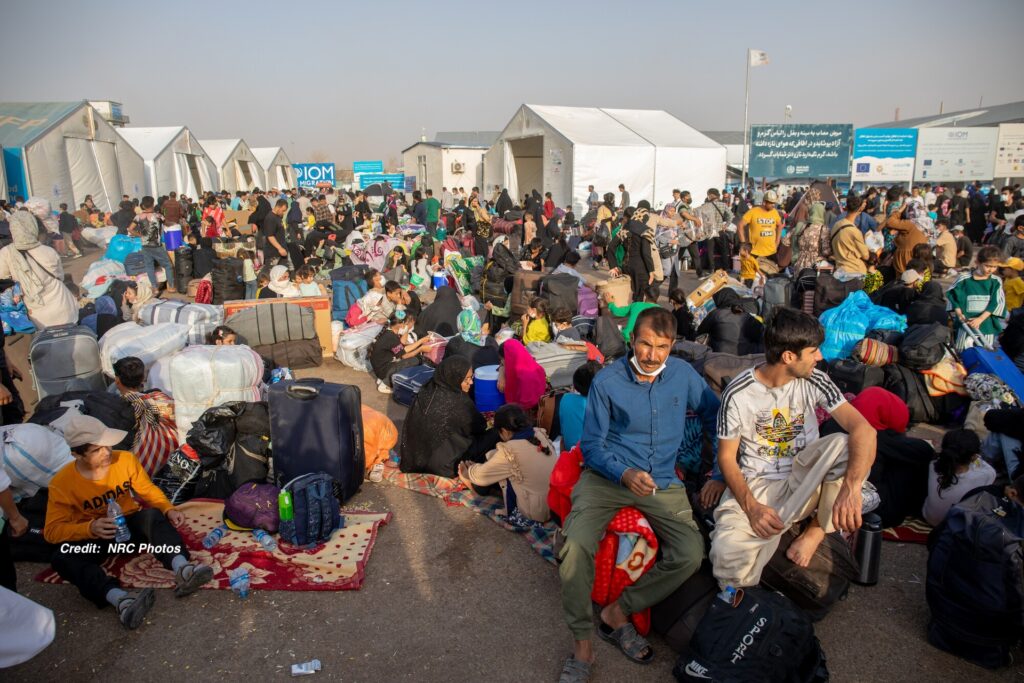
The return of more than six million Afghans from neighbouring countries since late 2023 has created additional humanitarian needs in a country already plagued by overlapping crises. Recurring climate shocks, regional tensions, and the shrinking space for women and girls since the Taliban retook power have placed additional pressure on communities. At the same time, steep cuts to humanitarian and development funding has left millions of Afghans struggling to survive.
“NATO countries have forgotten their solemn promises to Afghan girls and boys and turned their backs on Afghan civilians. We find ourselves increasingly alone in facing growing needs and shrinking rights for girls and women across Afghanistan. A growing funding gap is forcing humanitarian organisations to scale down food, water, shelter and medical assistance to homeless and starving Afghan families,” said Jan Egeland, NRC Secretary General.
Millions of Afghan refugees have returned to an uncertain life and future where they must start again from scratch. Up to 73 per cent of those returning remain unemployed, and there are very few livelihood opportunities.
“Shelter and livelihood support remains among the most critical needs of returnees. Shrinking aid funding means that many families are left without a proper roof over their heads, and are struggling to feed their children,” Egeland said.
Afghan authorities plan to distribute land plots to returnees as the centre of Afghanistan’s response to returnees. But, the high influx of returnees, complex procedures around distribution process, absence of sufficient investment and the lack of essential services make successful reintegration difficult.
Mohammad Jabbar, a returnee from Pakistan, told NRC “Most of the returnees, like us, urgently need shelter and opportunities to earn a living. We want the land distribution process to be prompt and responsive to these urgent needs.”
Despite these crises and continued humanitarian needs across Afghanistan, funding for the humanitarian response has continued to decline considerably. The annual Humanitarian Needs and Response Plan was nearly 96 per cent funded in 2021. In 2025, this had dropped to 42 per cent and so far this year, only 26 per cent of the required funding has been provided.
“NRC calls for increased development investment to support long-term solutions and recovery in Afghanistan. At the same time, the international community must engage meaningfully with the Afghan authorities to ensure that the humanitarian response and basic service delivery are not affected by politics, allowing vulnerable communities to access the assistance they need to rebuild their lives,” said Egeland.
- More than six million Afghans have returned from Pakistan and Iran since late 2023. (IOM DTM)
- 73 per cent of Afghan returnees are unemployed (Returnee resilience overview|Afghanistan).
- 3.2 million people were internally displaced people as of December 2025 (UNHCR Afghanistan Situation Report)
- A summary of the annual Humanitarian Needs and Response Plans can be found here.
- The funding available for the humanitarian response has been cut by almost 70 per cent, from 3.3 billion dollars in 2022 to 1 billion dollars in 2025. So far this year, only 450 million US dollars have been provided for the humanitarian response, about 26 per cent of the 1.7 billion dollars needed (UNOCHA Financial Tracking Service)
For more information or to arrange an interview, please contact:
NRC global media hotline: media@nrc.no, +47 905 62 329
Maisam Shafiey, Advocacy and Communications Manager, Kabul, Afghanistan: maisam.shafiey@nrc.no, +93 706453029
United Nations correspondent journalists – United Nations correspondent journalists – United Nations journalism articles – United Nations journalism articles – United Nations News – UNCA Awards