


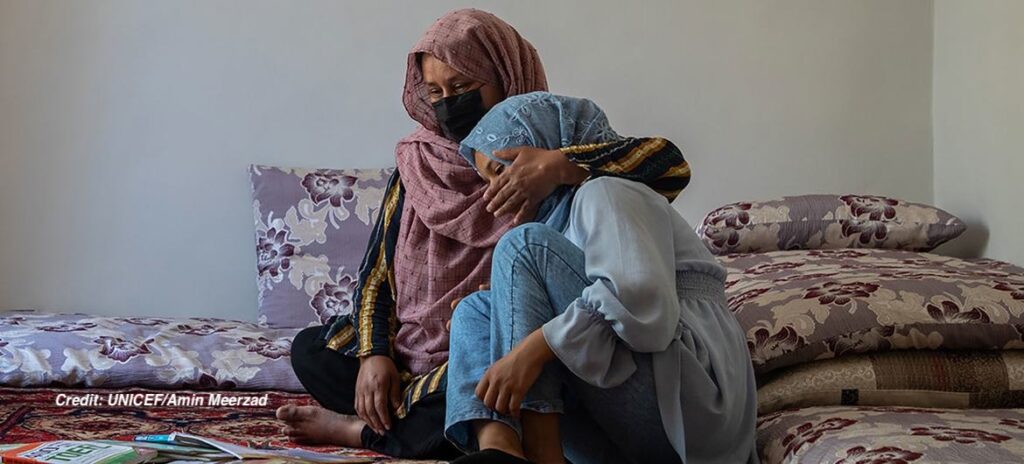
Note: New UN Women data reveals that half of Afghan women interviewed leave home only once or twice a month because of the severe restrictions on their movement and access to public spaces. New York, 12 August 2026 – Half a decade after the Taliban takeover in August 2021, Afghanistan has systematically dismantled the rights of half its population, making it a global outlier with no parallel in the modern world. Over the past five years, the de facto authorities have issued more than 100 decrees targeting women and girls, institutionalizing discrimination and stripping them of their fundamental rights – with profound consequences for their lives and for their communities, according to new UN Women data. In the past year alone, this exclusion of women and girls from education, employment, public life, justice systems, and healthcare has only intensified, entrenching what remains the world’s most severe women’s rights crisis. This unparalleled crisis of women’s and girls’ rights is at risk of being forgotten by the world. The following facts and figures illustrate how the systematic dismantling of women’s and girls’ rights has reshaped every aspect of life in Afghanistan: Women are unequal before the law: In addition to a broad range of decrees since 2021, key decrees issued in 2026 have further restricted women’s and girls’ access to justice and stripped them of equal status and protection under the law. Decree no. 12 abolishes legal equality between men and women before the law, placing husbands in a position of legal authority over their wives and limiting women’s ability to seek justice. It criminalizes violence within marriage only when it results in severe, visible physical injuries. Decree no. 18 makes it significantly harder for a woman to leave a marriage, while preserving men’s unilateral right to divorce. It also implicitly permits child marriage, further eroding the rights and protection of women and girls. The women’s health crisis is worsening: Being confined to the home – often while exposed to higher risks of violence – has profound mental health consequences. The loss of rights and opportunities, as well as limited access to physical activity, community, and emotional support has triggered a mental health crisis among women and girls, who report rising levels of anxiety, hopelessness and despair. According to a new UN Women report, seven in 10 women now describe their mental health as ‘bad’ or ‘very bad.’ Accessing healthcare has also become increasingly difficult for Afghan women due to mobility restrictions and growing shortages of women nurses and doctors. Afghanistan already has one of the world’s highest maternal mortality rates, with an estimated 638 maternal deaths per 100,000 live births in 2024. Women are excluded from public life: Restrictions on movement and access to public spaces intensified in 2025. According to UN Women data more than half of women now report leaving their homes only twice a month or less. Nearly three-quarters of women have reported to UN Women that they feel unsafe leaving home without a male guardian, or mahram, and more than half say they avoid public spaces, such as markets and health facilities, altogether. There is a growing system of surveillance and enforcement by thousands of men and women with wide ranging powers to detain people, which has led to a palpable sense of fear and insecurity felt sharply by women and girls. Girls are still out of school, jeopardizing current and future generations: Afghanistan remains the only country to enforce a systematic ban on girls attending high school and women attending university – many of whom would have become future teachers, doctors, nurses, and midwives. According to the latest estimates, Afghanistan could lose more than 25,000 female teachers and health workers by 2030 if current restrictions persist. Girls now face almost insurmountable challenges to accessing any form of education once they complete primary school. Women and girls are the most affected by the growing humanitarian crisis: In 2026, more than 10.7 million Afghan women and girls require humanitarian assistance. Across the country, deteriorating health outcomes, food insecurity, and shrinking access to services delivered by female professionals are deepening the crisis. In parallel the sustained returnee crisis with Afghans continuing to cross from Iran and Pakistan is placing extra pressure on already stretched local communities and economies. Fewer than one in five Afghan women returning from Iran and Pakistan can earn an income, contributing to rising debt and food insecurity among returnee families. De facto authority restrictions on women working for non-governmental organizations, combined with international aid cuts, are making it harder to deliver support to the women and girls who need it most. Women remain excluded from the labour market: Women’s participation in the labour force in Afghanistan remains chronically low, with only 7 per cent of women employed, compared to 84 per cent of men. The continued social and economic exclusion of women is projected to result in cumulative losses to the economy of USD $920 million (5.8 per cent of GDP) between 2024–2026. International funding cuts are putting lifesaving services at risk: Nearly three-quarters of women-led organizations surveyed in Afghanistan experienced funding cuts in 2025, with more than half of them expecting to suspend operations or close within the next year. Women’s organizations remain one of the last lifelines for Afghan women and girls, delivering life-saving services including protection from violence, healthcare, mental health and psychosocial support, livelihoods, and other types of humanitarian assistance. UN Women works across Afghanistan to stand with all women and girls so they can stay safe, build their skills, earn a living, access vital services, receive support in emergencies, and shape and lead humanitarian responses. —– Recent Afghanistan photos are available on the UN Women Multimedia Library homepage: https://multimedia.unwomen.org/ To learn more, visit In Focus: State of women’s rights in Afghanistan |
| Five years after the Taliban takeover: the normalization of the exclusion of women and girls in Afghanistan Note: New UN Women data reveals that half of Afghan women interviewed leave home only once or twice a month because of the severe restrictions on their movement and access to public spaces. New York, 12 August 2026 – Half a decade after the Taliban takeover in August 2021, Afghanistan has systematically dismantled the rights of half its population, making it a global outlier with no parallel in the modern world. Over the past five years, the de facto authorities have issued more than 100 decrees targeting women and girls, institutionalizing discrimination and stripping them of their fundamental rights – with profound consequences for their lives and for their communities, according to new UN Women data. In the past year alone, this exclusion of women and girls from education, employment, public life, justice systems, and healthcare has only intensified, entrenching what remains the world’s most severe women’s rights crisis. This unparalleled crisis of women’s and girls’ rights is at risk of being forgotten by the world. The following facts and figures illustrate how the systematic dismantling of women’s and girls’ rights has reshaped every aspect of life in Afghanistan: Women are unequal before the law: In addition to a broad range of decrees since 2021, key decrees issued in 2026 have further restricted women’s and girls’ access to justice and stripped them of equal status and protection under the law. Decree no. 12 abolishes legal equality between men and women before the law, placing husbands in a position of legal authority over their wives and limiting women’s ability to seek justice. It criminalizes violence within marriage only when it results in severe, visible physical injuries. Decree no. 18 makes it significantly harder for a woman to leave a marriage, while preserving men’s unilateral right to divorce. It also implicitly permits child marriage, further eroding the rights and protection of women and girls. The women’s health crisis is worsening: Being confined to the home – often while exposed to higher risks of violence – has profound mental health consequences. The loss of rights and opportunities, as well as limited access to physical activity, community, and emotional support has triggered a mental health crisis among women and girls, who report rising levels of anxiety, hopelessness and despair. According to a new UN Women report, seven in 10 women now describe their mental health as ‘bad’ or ‘very bad.’ Accessing healthcare has also become increasingly difficult for Afghan women due to mobility restrictions and growing shortages of women nurses and doctors. Afghanistan already has one of the world’s highest maternal mortality rates, with an estimated 638 maternal deaths per 100,000 live births in 2024. Women are excluded from public life: Restrictions on movement and access to public spaces intensified in 2025. According to UN Women data more than half of women now report leaving their homes only twice a month or less. Nearly three-quarters of women have reported to UN Women that they feel unsafe leaving home without a male guardian, or mahram, and more than half say they avoid public spaces, such as markets and health facilities, altogether. There is a growing system of surveillance and enforcement by thousands of men and women with wide ranging powers to detain people, which has led to a palpable sense of fear and insecurity felt sharply by women and girls. Girls are still out of school, jeopardizing current and future generations: Afghanistan remains the only country to enforce a systematic ban on girls attending high school and women attending university – many of whom would have become future teachers, doctors, nurses, and midwives. According to the latest estimates, Afghanistan could lose more than 25,000 female teachers and health workers by 2030 if current restrictions persist. Girls now face almost insurmountable challenges to accessing any form of education once they complete primary school. Women and girls are the most affected by the growing humanitarian crisis: In 2026, more than 10.7 million Afghan women and girls require humanitarian assistance. Across the country, deteriorating health outcomes, food insecurity, and shrinking access to services delivered by female professionals are deepening the crisis. In parallel the sustained returnee crisis with Afghans continuing to cross from Iran and Pakistan is placing extra pressure on already stretched local communities and economies. Fewer than one in five Afghan women returning from Iran and Pakistan can earn an income, contributing to rising debt and food insecurity among returnee families. De facto authority restrictions on women working for non-governmental organizations, combined with international aid cuts, are making it harder to deliver support to the women and girls who need it most. Women remain excluded from the labour market: Women’s participation in the labour force in Afghanistan remains chronically low, with only 7 per cent of women employed, compared to 84 per cent of men. The continued social and economic exclusion of women is projected to result in cumulative losses to the economy of USD $920 million (5.8 per cent of GDP) between 2024–2026. International funding cuts are putting lifesaving services at risk: Nearly three-quarters of women-led organizations surveyed in Afghanistan experienced funding cuts in 2025, with more than half of them expecting to suspend operations or close within the next year. Women’s organizations remain one of the last lifelines for Afghan women and girls, delivering life-saving services including protection from violence, healthcare, mental health and psychosocial support, livelihoods, and other types of humanitarian assistance. UN Women works across Afghanistan to stand with all women and girls so they can stay safe, build their skills, earn a living, access vital services, receive support in emergencies, and shape and lead humanitarian responses. —– Recent Afghanistan photos are available on the UN Women Multimedia Library homepage: https://multimedia.unwomen.org/ To learn more, visit In Focus: State of women’s rights in Afghanistan |
| Note to editors About UN Women UN Women is the UN organization dedicated to gender equality and the empowerment of women. A global champion for women and girls, UN Women was established to accelerate progress on meeting their needs worldwide. For more information about UN Women, contact the media team at: media.team@unwomen.org. |
| United Nations correspondent journalists – United Nations correspondent journalists – United Nations journalism articles – United Nations journalism articles – United Nations News – UNCA Awards |
| For the latest updates and more, visit unwomen.org and follow our social media channels below! If you have received this email as a forward, sign up to our Press Mailing List here. View all UN Women News & Announcements here. |