
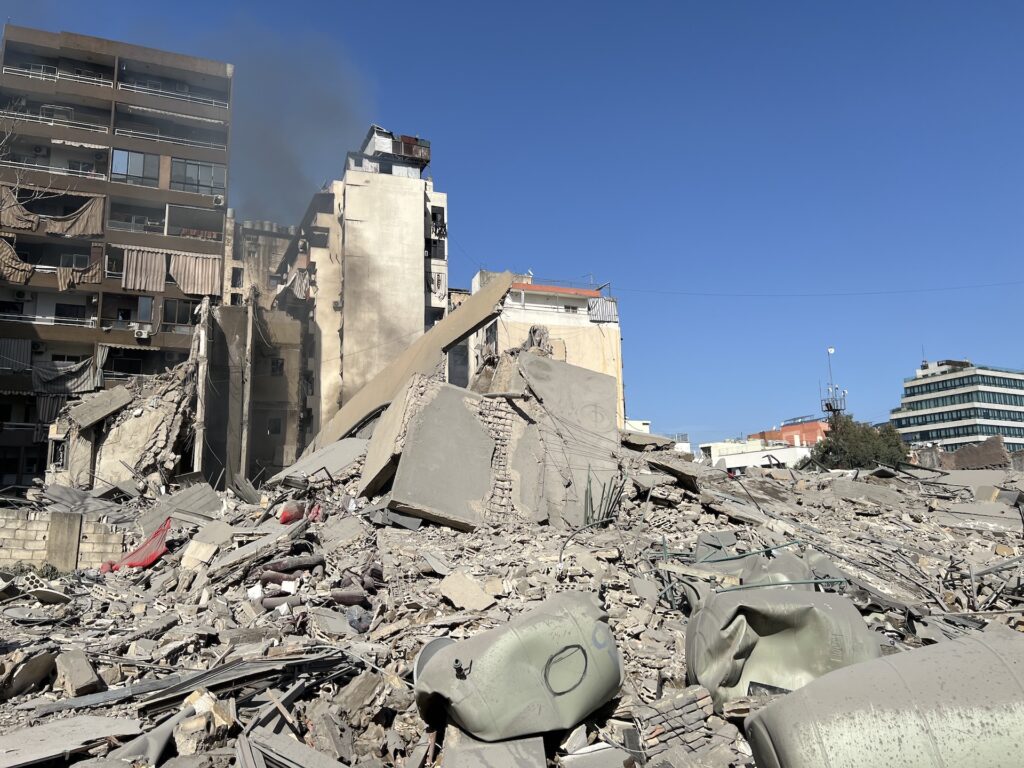
Amman/New York, 31 March 2026 – New estimates by the United Nations Development Programme (UNDP) suggest the military escalation in the Middle East, now into its fifth week, may cost economies in the region from 3.7 to 6.0 percent of their collective Gross Domestic Product (GDP).
This represents a staggering loss of US$120-194 billion and exceeds the cumulative regional GDP growth achieved in 2025. Coupled with an estimated rise in unemployment of up to 4 percentage points or 3.6 million jobs lost—more than the total jobs created in the region in 2025, these reversals will push up to 4 million people into poverty.
“Military Escalation in the Middle East: Economic and Social Implications for the Arab States region” — exposes the concerning reality of structural vulnerabilities characteristic to the region, which enable a short lived military escalation to generate profound and widespread socio economic impacts that may persist over a long-term,” UNDP said in a press release.
“This crisis rings alarm bells for countries of the region to fundamentally reevaluate their strategic choices of fiscal, sectoral, and social policies, representing an important turning point in the development trajectory of the region,” said Abdallah AlDardari, UN Assistant Secretary General and Director of the Regional Bureau for Arab State in UNDP.
“Our findings underline the pressing need to strengthen regional collaboration to diversify economies—beyond reliance on growth driven by hydrocarbons, and to expand production bases, secure trade and logistics systems, and broaden economic partnerships, to reduce exposure to shocks and conflicts.”
The assessment employs Computable General Equilibrium modelling to capture the magnitude of disruptions caused by a four-week conflict, and models its effects through key transmission channels, including increased trade costs, temporary productivity losses, and localized capital destruction. It conducted five simulation scenarios, representing escalating levels of conflict scenarios, ranging from a “moderate disruption,” where trade costs increase by tenfold, to an “extreme disruption and energy shock,” where trade costs increase a hundred-fold, intensified by a stop of hydrocarbon production.
The findings highlight that impacts are not uniform, varying significantly across the region due to structural characteristics of its main subregions. Estimates suggest that the largest macroeconomic losses are concentrated in Gulf Cooperation Council and the Levant subregions, where strong exposure to trade disruptions and energy market volatility drives significant declines in output, investment, and trade. Both subregions stand to lose 5.2-8.5 percent and 5.2-8.7 percent of their GDP, respectively.
Increases in poverty rates are concentrated in the Levant and Least Developed Arab Countries, where baseline vulnerability is highest and shocks translate more strongly into welfare losses. In North Africa, impacts remain moderate but still significant in absolute terms.
In the Levant the crisis is expected to increase poverty by 5 percent, pushing an additional 2.85-3.30 million people into poverty—accounting for over 75 percent of the rise in poverty across the region. Across the region, human development as measured by the Human Development Index (HDI) is expected to decline by approximately 0.2 to 0.4 percent, corresponding to a setback of roughly half a year to nearly one year of human development progress.
For more information and to arrange interviews, please contact:
Riad Sabbagh | Senior Communication Consultant | Regional Bureau for Arab States | riad.sabbagh@undp.org
Ahmed Bazzoum | Communication Specialist | Regional Bureau for Arab States | ahmed.bazzoum@undp.org
Noeman AlSayyad | Strategic Communications Advisor | Regional Bureau for Arab States | noeman.alsayyad@undp.org
Note to Editors
- This Assessment if part is part of a series of rapid assessments that UNDP is producing on the impacts of the Middle East military escalation on Iran, the Arab States region, Africa, the Asia Pacific region and on the global development outlook.
- Results presented in this brief should be interpreted as illustrative estimates of potential outcomes under different shock intensities, rather than realized impacts.
- Impact estimates are presented for four Arab States subregional groupings, including:
o Gulf Cooperation Council (GCC) countries, including Bahrain, Kuwait, Oman, Qatar, Saudi Arabia, and the United Arab Emirates
o The Levant, including Iraq, Jordan, Lebanon, the State of Palestine and Syria
o North Africa, including Algeria, Egypt, Libya Morocco and Tunisia
o Least Developed Arab countries (LDCs), including Sudan and Yemen—insufficient data did not allow for simulating impacts on Djibouti and Somalia. - Summary of Impacts:
Macroeconomic Impact | GDP
Region Loss of 3.7 – 6.0 % equivalent to US$120.00-194.00 Billion
GCC Loss of 5.2 – 8.5 % equivalent to US$103.00-168.00 Billion
Levant Loss of 5.2 – 8.7% equivalent to US$17.30-28.90 Billion
N Africa Gain of 0.0 – 0.4 % equivalent to US$0.09-3.20 Billion
LDCs Loss of 0.1 – 0.5 % equivalent to US$0.07-0.32 Billion
Unemployment Impact | Jobs lost
Region Increase by 1.8 – 4.0 % equivalent to 1.61-3.64 Million jobs lost
GCC Increase by 3.6 – 9.4 % equivalent to 1.17-3.11 Million jobs lost
Levant Increase by 2.3 – 2.7 % equivalent to 0.32 Million jobs lost
N Africa Increase by 0.1 % equivalent to 0.06 Million jobs lost
LDCs Increase by 0.2 – 0.8 % equivalent to 0.05-0.20 Million jobs lost
Poverty Impact | Additional population pushed below poverty line
Region Increase by 0.70 – 1.00 % equivalent to 3.05 – 3.96 Million people
GCC Not calculated due to very low baseline
Levant Increase by 4.45 – 5.15 % equivalent to 2.85 – 3.29 Million people
N Africa Increase by 0.03 – 0.05 % equivalent to 59 – 103 Thousand people
LDCs Increase by 0.15 – 0.60 % equivalent to 137 – 560 Thousand people
Human Development Impact | HDI | Year of progress set back
Region Decrease by 0.2 – 0.4 % equivalent to 0.5 – 1.0 Years set back
GCC Decrease by 0.3 – 0.5 % equivalent to 1.2 – 2.0 Years set back
Levant Decrease by 0.4 – 0.7 % equivalent to 0.9 – 1.5 Years set back
N Africa Increase by 0.0 – 0.1 % equivalent to Slight gain forward
LDCs Decrease by 0.0 – 0.1 % equivalent to Small but significant set back
due to low HDI baseline
Military escalation threatens human and economic development gains across Iran, UNDP analysis warns
Preliminary impact simulations show that military escalation related shocks are increasing pressure on livelihoods, essential services and human development prospects – even as communities across Iran continue to demonstrate resilience in navigating these evolving challenges
Bangkok, 31 March 2026 – A significant proportion of the population in the Islamic Republic of Iran could be pushed into poverty as daily life and local economic activity are disrupted, according to preliminary human development impact brief by the United Nations Development Programme (UNDP).
These shocks threaten to reverse Iran’s socioeconomic and poverty reduction gains. According to the analysis, Iran’s Human Development Index (HDI), estimated at 0.799 in 2023, could decline by 0.47 to 0.56 percentage points. This is equivalent to one to one and a half years of lost human development progress.
“Each day the crisis continues adds pressures on people’s current livelihoods and their futures,” said Beate Trankmann, UNDP Deputy Regional Director for Asia and the Pacific. “Rapidly stabilizing the situation and ensuring continuity of jobs and basic services will be critical to prevent today’s shocks from evolving into long-term human development setbacks.”
Despite government efforts to protect vulnerable households through food subsidies and cash transfers, food inflation remains high. Low-income households spend around 45 percent of their income on food, leaving them particularly exposed to further price increases and import disruptions in the current context.
This preliminary analysis, part of a series of UNDP Briefs examining the human development impact of conflict escalation, is based on available data and information with scenario simulations assuming a temporary 28-day disruption. The analysis underscores the urgent need to safeguard civilian infrastructure critical to people’s basic wellbeing.
Damage to education and health facilities, water and electricity systems, connectivity and local markets is already affecting households’ ability to access basic services and sustain daily livelihoods. This is particularly so for daily wage earners and informal sector workers. The continued disruption to small and medium-sized enterprises will have cascading impacts on household incomes that millions rely on.
The UNDP Brief underscores that any sustainable solution to these human development ‘breaks’ requires an end to the conflict. In the meantime, humanitarian assistance, targeted social protection, and rapid recovery support are essential to prevent longer-term poverty, protect essential services, and sustain local economic activity. UNDP will initiate support to early recovery activities, including the restoration of community electricity and water services, alongside support for micro and small enterprises and livelihoods recovery in economically vulnerable communities.
“Experience from around the world shows how fast instability can undo years of human development gains” said Kanni Wignaraja, UN Assistant Secretary-General and UNDP Regional Director for Asia and the Pacific. “While the situation continues to evolve, the human cost of these shocks is already being felt, so protecting the most vulnerable households in their efforts to navigate this period of economic uncertainty will be essential.”
LINK TO THE BRIEF: https://go.undp.org/S8t
Media contact: rbap.media@undp.org
United Nations correspondent journalists – United Nations correspondent journalists – United Nations journalism articles – United Nations journalism articles – United Nations News – UNCA Awards