


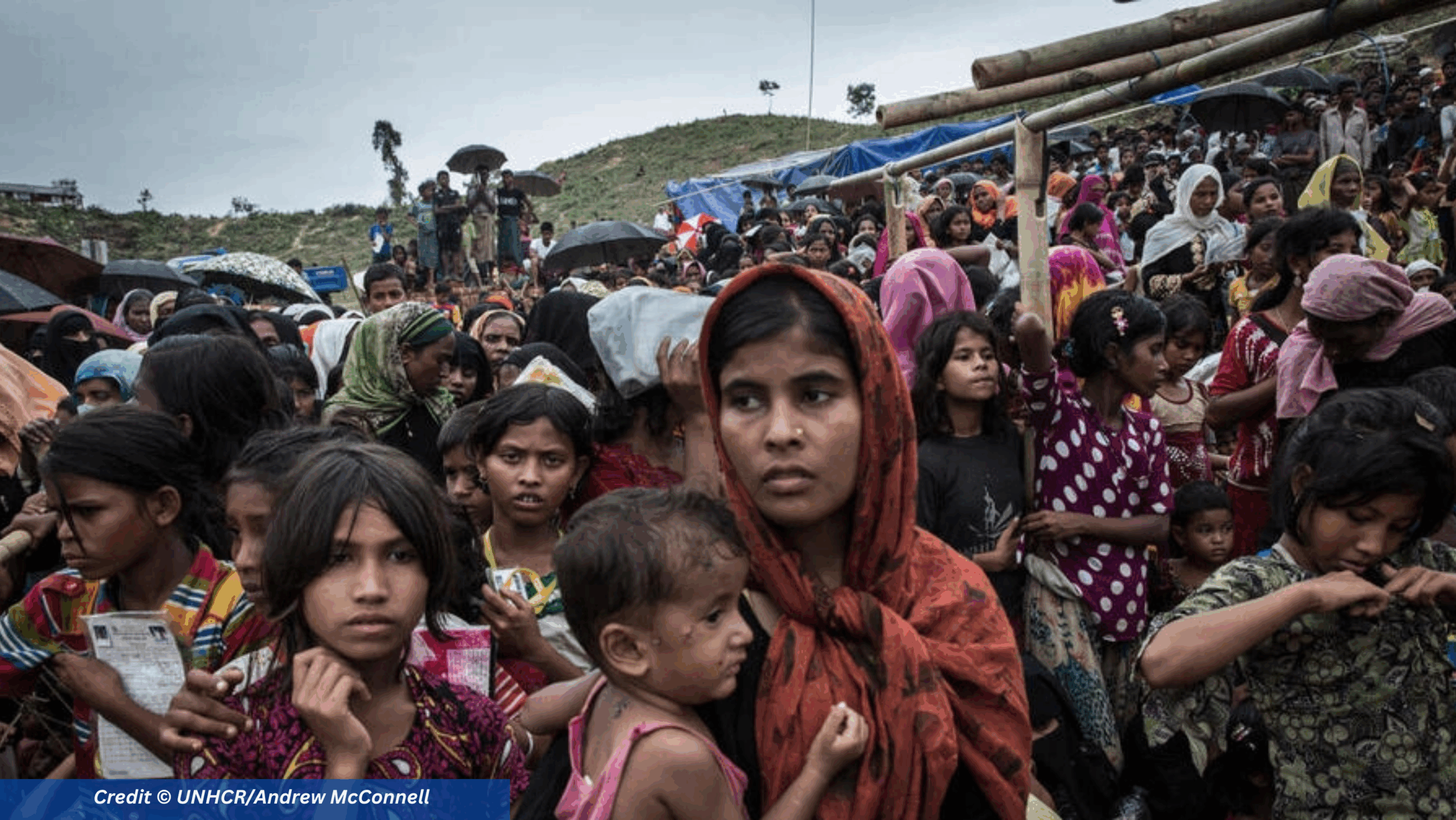
New York, 30 September 2025 – The UN called for world attention and sustainable resolution of the fate of Rohingya Muslims and minorities in Myanmar as their plight has worsened while countries around the world remain indifferent.
“We gather today to shine a global spotlight on the persecution and displacement of Rohingya Muslims and other minorities in Myanmar,” UN Secretary-General Antonio Guterres told a high-level conference in the UN General Assembly dedicated to the situation of the Rohingya since the military takeover of Myanmar in 2021.
“It is not enough to take stock of the status quo. We must also foster solidarity and forged solutions,” he said. “Minorities in Myanmar have endured decades of exclusion, abuse and violence. The Rohingya have been stripped of their right to citizenship. Targeted by hate speech. Terrorized with deadly force and destruction. Confined to IDP camps in Myanmar. with severely limited freedom of movement and little access to education and health services. More than a million have sought refuge in Bangladesh, which has shown remarkable hospitality.”
The UN said Bangladesh has taken over the burden of hosting more than 1.2 million Rohingya in massive refugee camps, including 150,000 who arrived in the country since fighting re-ignited in Myanmar’s Rakhine in 2024.
Filippo Grandi, the UN High Commissioner for Refugees, told the UN conference that the Rohingya fled to Bangladesh as they lived in Myanmar “with the threat of arbitrary arrest and detention, with restricted access to healthcare and education. They cannot move freely. They are subjected to forced labour and forced recruitment. Their lives are defined everyday by racism and fear.”
“For these reasons I want to reiterate my gratitude to countries in the region that for years have hosted refugees from Myanmar, and especially Rohingya refugees, such as Malaysia, Indonesia and Thailand.”
The UN said in a resolution that the objectives of the conference are to mobilize political support, sustain international attention on the crisis, review the overall crisis and address its root causes, including human rights issues, and share perspectives on the situation on the ground, including challenges faced by Rohingya and other minorities in Myanmar, as well as humanitarian issues within Myanmar and the region. It called for a comprehensive, innovative and concrete plan for a sustainable resolution of the crisis, including efforts to create a conducive environment for the voluntary, safe, sustainable and dignified return of Rohingya Muslims and other members of minority groups to Myanmar in a timely manner.
Volker Türk, the UN High Commissioner for Human Rights, said the humanitarian situation continues to deteriorate in Rakhine and across the country, as military blockades have severely restricted access. He said nearly a third of the country’s population, some 15.2 million people, are facing acute food insecurity this year. That represents an increase of almost 2 million people in a year.
“All these conditions have displaced over 3.5 million people within the country and pushed an additional 150,000 Rohingya to Bangladesh since January 2024,” Turk said. “Insecurity in the refugee camps in Bangladesh is deepening, leaving people in even greater fear and despair. Armed groups, including the Arakan Rohingya Salvation Army, prey on families – they extort money from them, and forcibly recruit boys and young men.”
Warning of collapse – UN News reported that Muhammad Yunus, the Chief Adviser of Bangladesh’s interim government who addressed the UN General Assembly’s annual debate on September 26, has issued one of the starkest warnings yet.
“The UN World Food Programme (WFP) warns of a critical funding shortfall. Without urgent new funding, monthly rations may have to be halved to a paltry $6 per person, pushing the Rohingya deeper into hunger and forcing them to resort to desperate measures,” he said.
He called for “enhanced contribution” from donors but stressed that the roots of the crisis lie inside Myanmar:
“Deprivation of rights and persecution of the Rohingya, rooted in cultural identity politics, continue in Rakhine. Reversal of the process of marginalization of the Rohingya cannot wait any further,” he said.
“There must be a political solution to the problems involving all stakeholders there, so that they become part of the Rakhine society with equal rights as equal citizens.”
United Nations journalists – United Nations journalists – United Nations journalists
United Nations News – United Nations News – UN Correspondents Association – UNCA Awards