


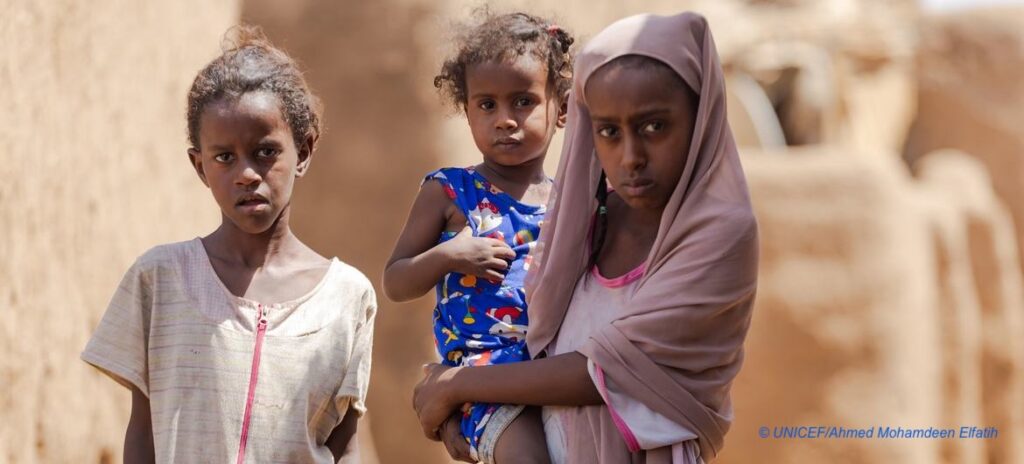
Note: A UN report on Children and Armed Conflict (CAAC) says that parties to armed conflicts were responsible in 2025 for the deaths of thousands of children and verified UN data showed that they also committed grave violations on the rights of children. The report says the highest levels of violations were the Occupied Palestinian Territory and Israel, the Democratic Republic of the Congo (DRC), Nigeria, Myanmar, and Somalia. Following is a press release.
New York, 17 June 2026 – A record number of children endured grave violations by parties to armed conflict in 2025, the highest number of children affected since the beginning of the CAAC mandate, a new report of the UN Secretary-General on Children and Armed Conflict published today shows.
According to verified UN data, 38,558 grave violations were committed against children in 2025, marking a fourth straight year of shocking figures. A total of 24,174 children were directly affected and their rights violated, with thousands subjected to multiple violations (3,176), including killing and maiming, recruitment and use, abduction, rape and other forms of sexual violence, attacks on schools and hospitals, and the denial of humanitarian access. A third of the victims were girls. Children are stripped bare of the rights, safety, and dignity to which every child is entitled.
For the first me since the establishment of the CAAC mandate 30 years ago, Government Forces were the main perpetrators of grave violations against children, signaling a worrying shift against the backdrop of an utter disregard for international law and the special protection afforded to children. This was amplified by hostilities and increasing use of explosive weapons in densely populated areas, as well as by the risks owed to the growing integration of artificial intelligence into targeting processes, the report notes.
“2025 was without a doubt one of the darkest chapters for child protection since monitoring began,” said Under-Secretary-General Vanessa Frazier, the Special Representative of the Secretary-General for Children and Armed Conflict. “When States, on whom the obligation to protect children falls, instead contribute to their suffering, it signals the deeper erosion of respect for international law. The principles of humanity, distinction, proportionality, and necessity must be restored — without exception,” she added.
Situations with the highest levels of violations in 2025 were the Occupied Palestinian Territory and Israel, the Democratic Republic of the Congo (DRC), Nigeria, Myanmar, and Somalia.
Killing (6,266) and maiming (7,958) remained the most verified violations, with a shocking 34% increase in killing compared to incidents that occurred in 2024; the denial of humanitarian access and the recruitment and use of children followed, with 8,322 incidents and 6,607 children affected, respectively. Children connutied to be abducted in high numbers (5,129), often for the purpose of recruitment and use or sexual violence. Rape and other forms of sexual violence continued unabated, with gang rapes used as a tactic of war verified in increasing numbers.
Landmines and explosive remnants of war litter the paths children walk every day, with the report highlighting that children remain the most vulnerable to such weapons, which continue to kill and maim long a4er conflicts have ended, as well as impair social and economic development. Survivors o4en face lifelong disabilities, trauma, and barriers to education and reintegration.
“Once safe neighborhoods have been transformed into front lines owed to relentless bombardments. Entire communities live under the shadow of weapons that should never be used near a child, and should definitely never target their homes, schools, or hospitals. A majority of child casualties in conflict zones resulted from the use of explosive ordnance — a toll that is as shocking as it is preventable,” stressed Frazier.
A total of 1,667 children were detained in 2025 for their actual or alleged association with parties to conflict. The Special Representative stresses that these children must be treated as victims, and that detention should be a measure of last resort, and that reintegration should be favoured, noting that such programmes are indispensable to lasting peace.
“Reintegration is where a child’s future – and our future as humanity – is rebuilt. I call on the international community to support, both politically and financially, the reintegration of all
children released from armed forces and groups, including children with disabilities. Each child carries a different burden of conflict, and each requires support that meets their specific needs, including those based on age and gender,” added Frazier. She further calls on all parties to immediately allow safe, rapid, and unimpeded humanitarian assistance, without discrimination of any kind.
30 Years Ago, the World Said: Enough
The year 2026 marks the 30th anniversary of the CAAC mandate. While the situation sharply deteriorated for children in 2025 in contexts like the occupied Palestinian Territory, including Gaza and the West Bank, Libya, Niger and South Sudan, important advances took place in other contexts. In 2025, 13,112 children formerly associated with armed forces or armed groups received protection or reintegration support across countries on the CAAC agenda. Engagement also bore fruit, and some 40 commitments were taken by pares to conflict, including handover protocols, capacity building initiatives, unilateral commitments, and bilateral dialogues in contexts like Somalia, Ukraine, and Colombia.
“Thirty years after the creation of the children and armed conflict mandate, the world can no longer claim ignorance. Humanity must take its responsibilities and recognise the mayhem that it has created for generations to come. Words are not enough; durable and resolute actions are needed. Each Member State must choose dialogue over destruction and uphold its obligations under international humanitarian and human rights law. Protecting children is not an aspiration — it is an obligation,” added Vanessa Frazier.
In the words of a child addressed to world leaders received as part of the Prove It Matters campaign: “Every day, children near active warzones get killed, tormented, sold, taken away from their families, traumatised and denied humanitarian help. You have the power, so please act.”
***
For more information:
Fabienne Vinet, Political Affairs Officer / Communications Officer, Office of the Special
Representative of the Secretary-General for Children and Armed Conflict: vinet@un.org
United Nations correspondent journalists – United Nations correspondent journalists – United Nations journalism articles – United Nations journalism articles – United Nations News – UNCA Awards