


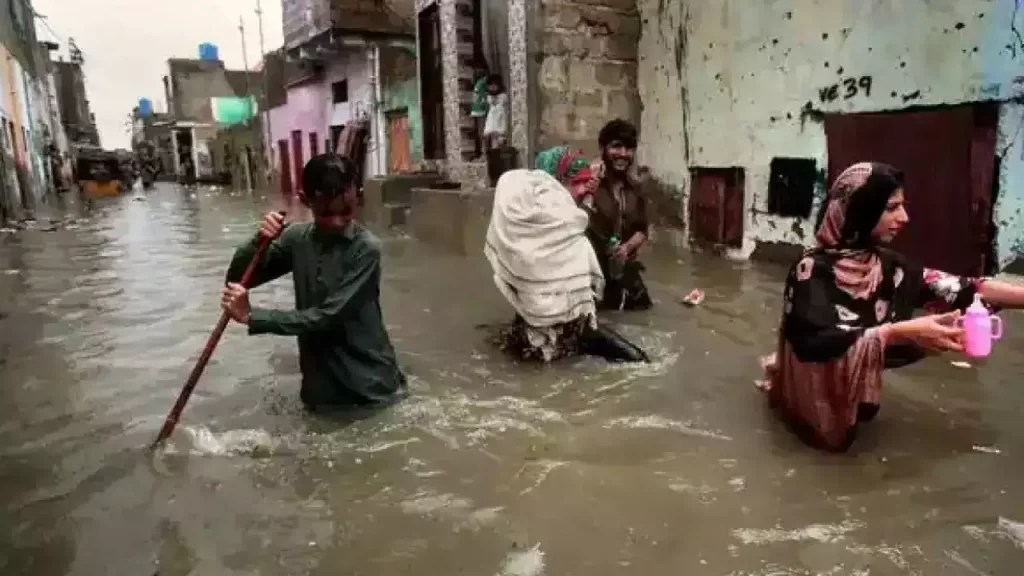
New York, 4 November 2025 – Decades of efforts and new pledges by nations to keep global temperatures down have done little to fight climate change and the world is now facing “serious” escalation of climate crisis and damages, the UN Environment Program (UNEP) said in advance of the 30th climate change conference at the Amazon city of Belem, Brazil.
Government leaders, climate scientists, civil society and non-governmental organizations are to meet in Belem 10 to 21 November, to review progress on efforts to fight climate change as temperatures are now predicted to reach 2.3 – 2.5 degree Celsius, exceeding the agreed temperatures of 1.5 degree C under the Paris Agreement reached in 2015. Many countries also have failed to submit national action plans to fight climate change.
A UNEP assessment of available new climate pledges under the Paris Agreement finds that “the predicted global temperature rise over the course of this century has only slightly fallen, leaving the world heading for a serious escalation of climate risks and damages.”
UNEP said in its Emissions Gap Report 2025: Off Target, issued before the Belem conference, which finds that global warming projections over this century, are now 2.3-2.5°C, compared to 2.6-2.8°C in last year’s report. Implementing only current policies would lead to up to 2.8°C of warming, compared to 3.1°C last year.
“The report finds that the multi-decadal average of global temperature rise will exceed 1.5°C, at least temporarily. This will be difficult to reverse – requiring faster and bigger additional reductions in greenhouse gas emissions to minimize overshoot, reduce damages to lives and economies, and avoid over-reliance on uncertain carbon dioxide removal methods,” the Nairobi-based UN agency said in a press release.
“Nations have had three attempts to deliver promises made under the Paris Agreement, and each time they have landed off target,” said Inger Andersen, Executive Director of UNEP. “While national climate plans have delivered some progress, it is nowhere near fast enough, which is why we still need unprecedented emissions cuts in an increasingly tight window, with an increasingly challenging geopolitical backdrop.”
“But it is still possible – just. Proven solutions already exist. From the rapid growth in cheap renewable energy to tackling methane emissions, we know what needs to be done. Now is the time for countries to go all in and invest in their future with ambitious climate action – action that delivers faster economic growth, better human health, more jobs, energy, security and resilience.”
Slow climate adaptation threatens lives and economies.
UNEP said rising global temperatures and intensifying climate impacts have created a “yawning gap” in adaptation finance for developing countries, threatening live, livelihoods and economies in those countries. It said in Adaptation Gap Report 2025: Running on Emptythat financial needs by developing countries by 2035 to adapt to climate are over US$310 billion per year – 12 times as much as current international public adaptation finance flows.
“Climate impacts are accelerating. Yet adaptation finance is not keeping pace, leaving the world’s most vulnerable exposed to rising seas, deadly storms, and searing heat,” UN Secretary-General António Guterres in his message on the report. “Adaptation is not a cost – it is a lifeline. Closing the adaptation gap is how we protect lives, deliver climate justice, and build a safer, more sustainable world. Let us not waste another moment.”
“Every person on this planet is living with the impacts of climate change: wildfires, heatwaves, desertification, floods, rising costs and more,” said Inger Andersen, Executive Director of UNEP. “As action to cut greenhouse gas emissions continues to lag, these impacts will only get worse, harming more people and causing significant economic damage.
“We need a global push to increase adaptation finance – from both public and private sources – without adding to the debt burdens of vulnerable nations. Even amid tight budgets and competing priorities, the reality is simple: if we do not invest in adaptation now, we will face escalating costs every year.”
United Nations journalists – United Nations journalists – United Nations journalists
United Nations News – United Nations News – UN Correspondents Association – UNCA Awards