
Immediate humanitarian needs are immense, while greater investment in protection, livelihoods, and opportunities is critical to successful reintegration and long-term stability.
Kabul, Afghanistan, 8 July 2026 — UN Development Programme (UNDP) Administrator Alexander De Croo and UN High Commissioner for Refugees (UNHCR) Barham Salih today called on the international community to provide urgent, sustained investment in Afghanistan as one of the world’s largest return movements places immense pressure on communities grappling with acute poverty, climate shocks and limited economic opportunities.
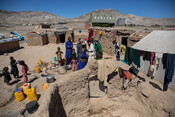
Since 2023, more than 6 million Afghans have returned to the country, including around 2.9 million in 2025. More than 750,000 people have already returned so far this year, with a further 2.5 million expected by the end of 2026.
Both leaders urged international partners not to turn away from Afghanistan, warning that aid cuts and declining international attention risk deepening poverty, fuelling further displacement and undermining fragile gains.
The call came at the conclusion of a joint mission to Afghanistan, during which the two UN leaders met with the de facto authorities and visited UN-supported activities in Mazar-e-Sharif, where they saw first-hand both the immense pressures facing communities and the impact that sustained international support can make. The mission underscored the UN’s joint commitment to meeting urgent humanitarian and protection needs while helping lay the foundations for longer-term recovery, stability and durable reintegration.
“While the needs across Afghanistan remain enormous, we have a critical window of opportunity to support communities to forge a path beyond crisis,” said Alexander De Croo, UNDP Administrator. “For people who are now returning, this is not the end of a journey; it is the beginning of one. People need jobs. They need access to basic services. They need the opportunity to rebuild their lives. These investments are already working, and the international community can expand this critical support. So people returning home become catalysts for recovery and lasting security.”
The visit highlighted the impact of existing UN-supported programmes, including protection services, legal identity support, livelihoods, psychosocial assistance, basic community services and access to finance that helps small businesses grow and create jobs, particularly for women and young people.
The two UN chiefs also underscored new joint efforts to expand access to legal identity documentation, which is essential for accessing services, economic opportunities and long-term reintegration. After years outside the country, fewer than half of returning Afghans possess documentation linking them to Afghanistan.
Through their complementary mandates, UNHCR and UNDP support returnees from reception and protection at the border through reintegration, livelihoods, social cohesion and economic recovery in the communities where they settle.
“Nearly half the population requires humanitarian aid, and with millions more Afghans expected to return, local communities are under great pressure. People need our support now,” said Barham Salih. “But meeting immediate needs is only part of the answer. Afghanistan’s long-term recovery depends on all Afghans having the opportunity to contribute to their country’s future. Protection, opportunity and dignity must go hand in hand, particularly for women and girls. UNHCR will continue working with Afghanistan and its neighbours to promote conditions for returns that are safe, voluntary and dignified.”
In meetings with senior officials of the de facto authorities, the two UN chiefs called for the full participation of women in Afghanistan’s social and economic life and for women and girls to enjoy their fundamental rights. They stressed that women and girls are indispensable to household resilience, community stability and the country’s long-term recovery. They also underscored the imperative that female humanitarian workers be able to reach and assist women and girls, including female returnees, as part of the response.
Afghanistan remains one of the world’s most fragile economies. Heavily dependent on agriculture, the country is acutely exposed to the impacts of climate change. Recent returnees are among the most vulnerable, with 92 per cent unable to meet their basic needs. In provinces receiving large numbers of returnees, only 3 per cent have formal employment, while 78 per cent rely on casual labour.
Many returnees arrive with significant protection needs and limited resources. Ensuring access to legal identity documentation, essential services, livelihoods and community support will be critical to helping returnees rebuild their lives with dignity and contribute to Afghanistan’s long-term recovery.
Media contacts
For UNDP in New York City, USA, please contact Dylan Lowthian dylan.lowthian@undp.org +1 646 673 6350
For UNHCRin Kabul, Charlie Goodlake: goodlake@unhcr.org, +44 7810 260093
For UNHCR in Geneva, Matthew Saltmarsh: saltmars@unhcr.org, +41 79 967 99 36
About UNDP – UNDP is the leading United Nations organization fighting to end the injustice of poverty, inequality, and climate change. Working with our broad network of experts and partners in 170 countries, we help nations to build integrated, lasting solutions for people and plan.
About UNHCR
UNHCR, the UN Refugee Agency, is a global organization dedicated to saving lives, protecting rights and building a better future for people forced to flee their homes because of conflict and persecution.
We lead international action to protect refugees, forcibly displaced communities and stateless people.
United Nations correspondent journalists – United Nations correspondent journalists – United Nations journalism articles – United Nations journalism articles – United Nations News – UNCA Awards