
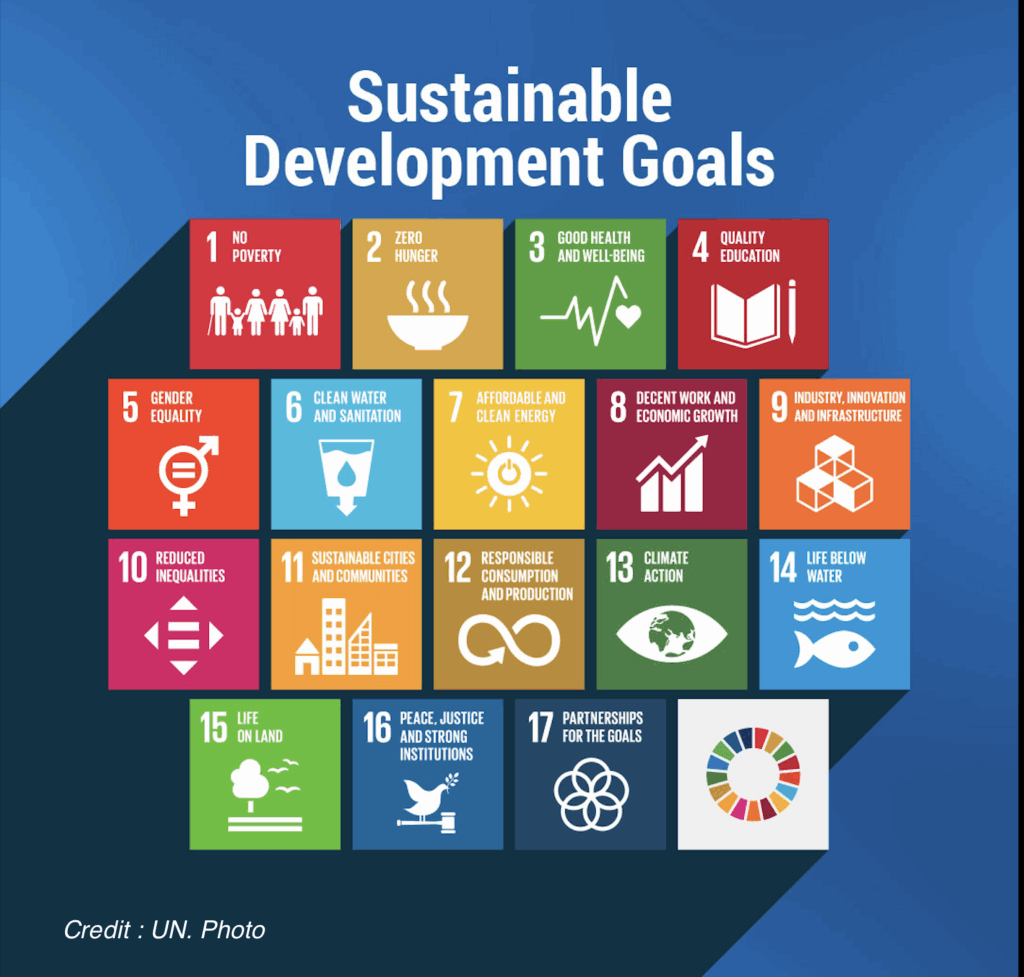
With fewer than five years to 2030, a decisive final push is needed to keep the promise of
the SDGs within reach
New York, 7 July 2026 — Since their adoption in 2015, the Sustainable Development Goals
(SDGs) have delivered results at scale – bringing access to water, electricity and health
care to billions. However, progress remains uneven and insufficient. Without a decisive
push to rapidly scale up what works, the promise of the SDGs risks slipping out of reach,
according to The Sustainable Development Goals Report 2026, released today.
What a decade of evidence tells us: the SDGs deliver results
Since 2015, sustained investment, sound policies and international cooperation have
improved the lives of billions of people worldwide with measurable gains across the SDGs.
Nearly one billion people gained access to safely managed drinking water and 1.2 billion to
safely managed sanitation. New HIV infections fell by 30 per cent between 2015 and 2024,
and AIDS-related deaths by 35 per cent. Electricity now reaches 92 per cent of the world’s
population. Internet access has surged, from 40 to 74 per cent. Social protection covers
more than half the global population for the first time in history.
Behind these results is an important and often overlooked achievement: the data
revolution. A decade ago, data was available for only half of all SDG indicators. Today, a
global database of more than 3.2 million data points covers nearly every indicator —
enabling countries to identify where progress is accelerating, where gaps persist and which policies are delivering results.“
Guided by the data in this report, our vision of the 2030 Agenda remains within reach.
“Together, let us make a decisive final push to achieve the Sustainable Development Goals
and build a healthy, prosperous future for all,” said United Nations Secretary-General António Guterres.
Why the world is falling short: overlapping crises and a widening financing gap
Despite progress, however, major challenges persist. Of the 139 SDG targets with trend
data, only 36 per cent are on track or making moderate progress. Nearly half — 49 per cent
— are advancing too slowly, and 15 per cent have regressed below 2015 baselines.
One in ten people still live in extreme poverty. Around 2.3 billion people face moderate or
severe food insecurity. More than 150 million children remain stunted. Maternal mortality
stands at nearly three times the global target. None of the gender equality targets are on
track. The number of people affected by climate-related disasters has more than doubled
since 2015. Escalating conflicts, climate change, slowing economic growth, rising debt
and a record decline in official development assistance are compounding the shortfall and
disproportionately affecting the world’s most vulnerable people.
What must happen now: scale up what works
The report emphasizes that the SDGs remain the world’s shared blueprint for peace,
prosperity and sustainability. The evidence accumulated over more than a decade of
implementation shows that meaningful progress is achievable — but only when political
commitment, financing, innovation and international cooperation align.
“More than a decade of implementation has shown what is possible,” said Li Junhua,
United Nations Under-Secretary-General for Economic and Social Affairs. “The task now is
to scale up what works — with the urgency, investment and cooperation needed to fulfill
the promise of the 2030 Agenda.”
Closing the approximately $4 trillion annual SDG financing gap — through the Sevilla
Commitment and the reform of the international financial architecture — is essential. This
must be matched by stronger data systems through the Medellín Framework to direct
investment to the most vulnerable first. Accelerating the energy transition, harnessing
frontier technologies including artificial intelligence for sustainable development,
advancing gender equality as a cross-cutting priority, and reinforcing multilateral
cooperation will also be critical to success.
The choices made over the next four years — on financing, cooperation and collective
crisis response — will have lasting effects for generations to come, according to the report. Additional key facts and figures.
Progress
- Most regions will be close to eradicating extreme poverty by 2030, except sub-
Saharan Africa, the Middle East and North Africa, and Oceania (excluding Australia
and New Zealand). - Between 2012 and 2024, stunting prevalence among children under five declined,
resulting in 30.2 million fewer stunted children worldwide. - The share of births attended by skilled health personnel rose from 80 to 87 per cent
between 2015 and 2025 and is on track to reach the 90 per cent target by 2030. - Between 2019 and 2025, 99 legal reforms were enacted to remove discriminatory
laws and establish gender equality frameworks; women now hold 27.4 per cent of
parliamentary seats, up from 22.3 per cent in 2015. - Child labour fell by more than 20 million between 2020 and 2024.
- Global unemployment stood at a near-historic low of 4.9 per cent in 2025.
- Renewable electricity generating capacity per capita grew at a record 14 per cent
between 2023 and 2024 and is now 2.2 times its 2015 level.
Challenges - The global extreme poverty rate is projected to reach only 10 per cent by 2026 — just
3 percentage points below its 2015 level, far short of the target to end extreme poverty. - 273 million children and young people remain out of school; one in five young
people aged 15–24 is not in employment, education or training, and young people
are nearly four times more likely to be unemployed than adults. - An estimated 1.16 billion people — roughly one in four urban residents — live in
slums or informal settlements. - Official development assistance fell by a record 23.1 per cent in 2025 — the largest
annual decline ever recorded — returning to roughly 2015 levels. - The global refugee population reached 440 per 100,000 people by mid-2025, more
than double the level of a decade earlier. - Extinction risk is worsening across all species groups; protection of key biodiversity
areas averaged only 45 per cent in 2025. - Violent conflict has surged to its highest level in decades. As of December 2025,
more than 117.8 million people were forcibly displaced worldwide, erasing years of
development gains in months. - Global temperatures in 2025 reached 1.43°C above pre-industrial levels and
atmospheric carbon dioxide hit its highest concentration in two million years. - The external debt of low- and middle-income countries reached a record $8.9 trillion
in 2024.
For more information, please visit: https://unstats.un.org/sdgs/report/2026
Hashtags: #SDGreport #SDGs #GlobalGoals
Media contacts:
Sharon Birch, UN Department of Global Communications, birchs@un.org
Helen Rosengren, UN Department of Economic and Social Affairs.
United Nations correspondent journalists – United Nations correspondent journalists – United Nations journalism articles – United Nations journalism articles – United Nations News – UNCA Awards