Author name: admin

J. Tuyet Nguyen, a journalist with years of experience, has covered major stories in New York City and the United Nations for United Press International, the German Press Agency dpa and various newspapers. His reports focused mostly on topics with international interests for readers worldwide. He was president of the United Nations Correspondents Association (2007 and 2008), which is composed of more than 250 journalists representing world media with influence over policy decision makers. He has chaired the organization of the annual UNCA Awards, which seeks to reward journalists around the world who have done the best broadcasts and written reports on the UN and its specialized agencies. He has traveled the world to cover events and write stories, from politics to the environment as well cultures of different regions. But his most important reporting work has been with the United Nations since the early 1980s. He was bureau chief of United Press International office at the UN headquarters before joining dpa in 1997. Prior to working at the UN, he was an editor on the International Desk of UPI World Headquarters in New York. He worked in Los Angeles and covered the final months of war in Vietnam for UPI.

UN marks 80th anniversary with calls to make the organization more effective

New York, 26 June 2025 – The United Nations was established 80 years ago when countries that participated in the months-long San Francisco Conference adopted a charter while World War II was ending. The aging organization now needs significant reform to remain relevant.

The Charter of the United Nations, adopted by the original 50 countries that attended the conference led mostly by the World War II victors, says its primary determination is to “save succeeding generations from the scourge of war.” But hundreds of conflicts big and small have happened since the end of World War II in 1945. The world organization currently faces crises, wars, funding cuts, inequalities and mistrust, and division among member states.

UN Secretary-General Antonio Guterres acknowledged that the organization with 193 nations is facing times of difficulties and asked in his project UN80 Initiative launched in May: “How can we be the most effective Organization that we can be? How can we be more nimble, coordinated and fit to face the challenges of today, the next decade, and indeed the next 80 years?  The UN80 Initiative is anchored in answering these questions and equipping our organization in an era of extraordinary uncertainty.”

Guterres said the UN80 Initiative is structured around three key workstreams: “First, we are striving to rapidly identify efficiencies and improvements under current arrangements.  Second, we are reviewing the implementation of all mandates given to us by Member States. And third, we are undertaking consideration of the need for structural changes and program realignment across the UN system.”

Guy Ryder, the Under-Secretary-General for Policy and chair of the UN80 Task Force, said in an interview published by UN News: “This is a good time to take a look at ourselves and see how fit for purpose we are in a set of circumstances which, let’s be honest, are quite challenging for multilateralism and for the UN.”

UN News said the UN80 Initiative “seeks not only to improve efficiency, but also to reassert the value of multilateralism at a time when trust is low and needs are high. It aims to reinforce the UN’s capacity to respond to today’s global challenges – ranging from conflict, displacement, and inequality to climate shocks and rapid technological change – while also responding to external pressures such as shrinking budgets and growing political divisions in the multilateral space.”

“We will come out of this with a stronger, fit-for-purpose UN, ready for the challenges the future will undoubtedly bring us,” said Ryder.

“Yes, we do face financial challenges. No need to avert our eyes from that. But this is not a cost-cutting, downsizing exercise. We want to make the UN stronger,” he said.

UN News said the UN80 Initiative aims to modernize and streamline the UN system’s structure, priorities and operations to try to meet the challenges of our times. The initiative wields the potential to reinforce the Pact for the Future by focusing on the UN’s core strengths, fostering systemwide efficiencies, relocating staff to where needs are greatest and encouraging a new Grand Bargain to reinforce the multilateral system — reflecting renewed concerns about another Cold War or even a third world war, as well as environmental destruction, population growth and migration.

United Nations journalists – United Nations journalists – United Nations journalists

United Nations News – United Nations News – UN Correspondents Association – UNCA Awards 

UN marks 80th anniversary with calls to make the organization more effective Read More »

Small (and Steady) Can Be Beautiful

Note: While the UN is affected by funding cuts that have drastically reduced humanitarian activities worldwide, the United Nations Staff 1% for Development Fund has remained active like a “lighted candle in the darkness.”

By Pat Duffy and Johanna Stansfield

New York, 25 June 2025 – In these days of “UN austerity measures” that are affecting humanitarian aid worldwide (as UN Member States – especially large donor countries – are reducing their contributions), there is at least one lighted candle in the darkness: the continued small but steady efforts of the United Nations Staff 1% for Development Fund.

For over forty years, members of the Fund’s Management Committee have reviewed and selected projects proposed by community groups, mostly from Global South rural villages, where access to clean water, jobs and education is often scarce. In line with the Fund’s criteria, the projects must be income-producing and self-sustaining. The selected groups  receive  microgrants (capped at $5,000) to help implement and monitor the projects over a period of one to two years.

Since its creation in 1984 by a group of New York staff members, the Fund has given microgrants to help launch between five and eight projects a year. In 2023, the Fund approved microgrants for seven projects, in Togo, Ghana and Kenya, for a total of $34,370.

In Kenya, funds enabled a non-governmental organization to expand its vocational training program to teach men and women skills in carpentry, woodworking, motor vehicle mechanics, tailoring and dressmaking, electrical work and metalwork, by adding new power tools, including an electric lathe, two welding machines and two angle grinders, to its toolkit.

In Togo, funds were provided to buy a mill for grinding soybeans, corn and other grains and to provide training to a group of women on its use. The project helped reduce the women’s tedious and time-consuming work of milling by hand. Training was provided in business management, literacy skills and activities to generate income from the mill-processed goods. Providing such a vital service to their neighbors enabled the women to raise their status in the community and take on more leadership roles.

In 2024, the Fund was able to approve grants for only half the usual number of projects, for a total of $15,000. Contributions to the Fund were reduced as it lost members owing to retirement and increasing economic uncertainty regarding employment.

Among the 2024 grantees was a project to dig two boreholes (shallow wells) on the grounds of two elementary schools in rural Malawi to provide a clean water source for students and staff and village residents. The two boreholes cost $5,000 and helped to transform the lives of the local residents. They enabled girls, who often had to miss school in order to carry out their daily task of collecting water from faraway wells, to attend school on a more regular basis. Moreover, residents no longer needed to use impure nearby water sources, which could leave them vulnerable to such diseases as cholera, dysentery and malaria.

Over the years, the Fund has supported a range of other projects, including supplying goats to village women in India and Bangladesh.  The  women, who often lacked job skills, were able to earn income by raising goats and selling their milk to members of their communities.

The Fund’s two longest-running projects are the Kitengesa Community Library, a village library and community center in rural Uganda (funded in 2000), and “Esperanza”, a health clinic,  educational center, and bee-keeping/honey enterprise in the Dominican Republic (funded in  1994). Both centers were launched thanks to the initial support of the 1% Fund and have since then expanded their services with grants from other sources.

The year 2024 marked the fortieth anniversary of the Fund in New York, which was celebrated through an event held at UN Headquarters in a space generously offered by the UN Correspondents Association. The renowned UN scholar, Stephen Schlesinger, gave an excellent presentation on the history and work of the UN, which led to a lively Q&A with the audience. The event was one of several “Authors-for-Literacy” events organized by the Fund to gain resources and members.

Moral philosopher and advocate for global development and Professor of Bioethics at Princeton University, Peter Singer, has also presented at a 1% Fund “Authors-for-Literacy” event. In a recent 2025 New York times article, Professor Singer advocates for continued support of charities in the face of reduced funding from conventional sources. To quote Singer: the best way to enable the continued funding of projects is “to support alternative financing models”.

The 1% Fund is one such model, small though it is. 

All UN staff work towards the common goal of making the world a better place. Staff members can make an even more direct impact by joining the Fund. As the Fund is staffed by volunteers, there are no overhead costs, and 100% of contributions go towards funding projects. To support this vital work, UN staff members, both active and retired, are invited to become regular contributors, offering a minimum of $15 per month, which the Payroll Office can deduct directly from the staff member’s salary.

As Professor Singer explains in his book , The Most Good You Can Do: How Effective Altruism Is Changing Ideas About Living Ethically: “Most effective altruists are not saints but ordinary people like you and me… Some of them are content to know they are doing something significant to make the world a better place. Many of them like to challenge themselves, to do a little better this year than last year.”

Contact:

Alice Harrison, Convenor, UN One Percent for Development Fund, turtlerelease@yahoo.com

Samantha Fohmann, Treasurer, samantha.fohmann@un.org

 Pat Duffy, member, Management Committee, PLduffy@gmail.com

Johanna Stansfield, member, Management Committee, johanna.stansfield03@gmail.com

United Nations journalists – United Nations journalists – United Nations journalists

United Nations News – United Nations News – UN Correspondents Association – UNCA Awards 

Small (and Steady) Can Be Beautiful Read More »

Update: UN calls for peaceful resolution of Israel-Iran conflict

New York, 22 June 2025 – The United Nations Security Council held an emergency session at which UN leaders and council members called for intensifying diplomatic efforts to end the escalating exchanges of deadly missiles between Israel and Iran one day after the US bombed Iran’s nuclear plants.

The 15 members of the Security Council, whose decisions are binding on UN members, were called to the meeting while peace negotiations have begun to prevent the Israel-Iran conflict from spreading in the Middle East region. The United Kingdom is holding talks with Iran, Germany and France to seek a diplomatic solution to the conflict.

UN Secretary-General Antonio Guterres told the council that he had been condemning any military escalation in the Middle East and his most recent call to give peace a chance was not heeded after the US said it had “totally obliterated” Iran’s nuclear facilities at Fordo, Natanz and Isfahan.

“The people of the region cannot endure another cycle of destruction,” Guterres said. “And yet, we now risk descending into a rathole of retaliation after retaliation.

To avoid it, diplomacy must prevail.”

“We must act – immediately and decisively – to halt the fighting and return to serious, sustained negotiations on the Iran nuclear program.  We need a credible, comprehensive and verifiable solution – one that restores trust – including with full access to inspectors of the IAEA, as the United Nations technical authority in this field. “

Guterres said the Non-Proliferation Treaty is a cornerstone of international peace and security and he urged Iran to respect it.

“The United Nations stands ready to support any and all efforts toward a peaceful resolution,” he said. “But peace cannot be imposed – it must be chosen. I urge this Council – and all Member States – to act with reason, restraint, and urgency.

We cannot – and must not – give up on peace. “

Miroslav Jenca, the UN Assistant Secretary General on threats to international peace and security quoted the Iranian state media as saying that the three nuclear sites had been evacuated before the US bomb attacks and that the highly enriched uranium stockpile was transferred in advance. 

“Iran has said there were no immediate signs of radioactive contamination at the three locations following the strikes,” Jenca said. He also said that he had urged Iran to allow International Atomic Energy Agency (IAEA) inspectors to conduct damage assessments of the bombed facilities.

Hostilities between Israel and Iran exploded on June 13 and according to Iran’s Ministry of Health 430 people have been killed and more than 3,500 others injured due to Israeli strikes across Iran as of June 21, Jenca said. He said, according to Israel authorities, that 25 Israelis have been killed and 1,300 more have been injured since the beginning of exchanges with Iran.

“I reiterate the Secretary-General’s grave alarm over the use of force by the United States against Iran,” Jenca said. “This latest development must be viewed with the utmost seriousness.  It marks a dangerous escalation in a conflict that has already devastated many lives in both countries, in a region on the edge. It is a direct threat to international peace and security.”

Jenca said Iran’s parliament “unanimously expressed support for measures to close the Strait of Hormuz – a vital maritime route for global energy transit.  Iran’s Supreme National Security Council would need to take the final decision.”

The IAEA said in a statement on June 22 that there was no sign of any health-impacting radiation resulting from the US strikes beyond the three Iranian sites targeted, citing Iranian nuclear energy authorities.

IAEA Director General Rafael Grossi said the sites had all contained enriched uranium verified by IAEA inspectors “to different levels” and confirmed that “radioactive and chemical contamination” may have occurred inside the facilities hit, UN news reported.

“In view of the increasingly serious situation in terms of nuclear safety and security, the Board of Governors will meet in an extraordinary session tomorrow, which I will address,” Mr. Grossi said.

“As of this time, we don’t expect that there will be any health consequences for people or the environment outside the targeted sites,” he added.

US Ambassador Dorothy Shea, the acting representative of the US to the United Nations, said in her address the council: “This operation sought to eliminate a long standing but rapidly escalating source of global insecurity and to aid our ally Israel in our inherent right of collective self-defence, consistent with the UN Charter.”

“The time finally came for the United States in the defence of its ally and in the defence of our own citizens and interests, to act decisively. As President Trump said any Iranian attack direct or indirect against Americans or American bases will be met with devastating retaliation.”  


Ambassador Joonkook Hwang of South Korea said. “Despite the deeply concerning developments in recent days, the Republic of Korea remains firmly convinced that no sustainable resolution to this crisis can be achieved through military means alone.”

“Indeed, now more than ever we implore all parties to recognize that diplomacy is not merely an option but an urgent necessity.  We call on all sides to exercise maximum restraint and to commit, in earnest, to restoring dialogue and engaging in reinvigorated diplomatic efforts.” 

(By J. Tuyet Nguyen)

United Nations journalists – United Nations journalists – United Nations journalists

United Nations News – United Nations News – UN Correspondents Association – UNCA Awards 

Update: UN calls for peaceful resolution of Israel-Iran conflict Read More »

Nearly eight out of ten young Afghan women are excluded from education, jobs, and training

Note: Since the Taliban takeover of Afghanistan in August 2021, women and girls in the country have suffered a deliberate and unprecedented assault on their rights, freedoms, and dignity. The 2024 Afghanistan Gender Index published by UN Women shows that nearly eight in ten young Afghan women are excluded from education, employment, and training. The index is also the most extensive study on women’s empowerment and gender equality since the Taliban takeover. Following is a press release from UN Women, which is a UN entity dedicated to gender equality and the empowerment of women worldwide.

New York, 17 June 2025 – Nearly four years after the Taliban takeover in August 2021, a new UN Women report reveals that Afghan women are falling significantly behind global standards for human development. 

The Afghanistan Gender Index,  the most comprehensive assessment of women’s empowerment and gender equality since the Taliban took power, reveals that Afghanistan has the second-widest gender gap in the world, with a 76 per cent disparity between women’s and men’s outcomes in health, education, financial inclusion, and decision-making. The Index also shows that women, on average, are realizing just 17 per cent of their full potential to make choices and access opportunities, while on average, women worldwide achieve 60.7 per cent.

“Afghanistan’s greatest resource is its women and girls,” said UN Women Executive Director Sima Bahous. “Their potential continues to be untapped, yet they persevere. Afghan women are supporting each other, running businesses, delivering humanitarian aid and speaking out against injustice. Their courage and leadership are reshaping their communities, even in the face of immense restrictions. We must stand with them in their pursuit of a country that reflects their rights and the aspirations of all Afghans.”

According to UN Women’s report, developed with financial support from the European Union, 78 per cent of young Afghan women are not in education, employment or training – nearly four times the rate for Afghan men. The secondary school completion rate for girls will soon collapse to zero, following bans on secondary and tertiary education – including in medical education – for girls and women. 

Afghanistan still has one of the largest workforce gender gaps in the world, with only 24 per cent of women participating in the labour force, compared to 89 per cent of men. Women are more likely to work at home and in lower-paid, insecure jobs. Women also take on a greater share of unpaid domestic work: 74 per cent of women spent significant time doing household chores, compared to only 3 per cent of men. 

The financial divide is equally stark, with men nearly three times more likely than women to own a bank account or use mobile money services, according to the new Index. 

While general restrictions remain for women working, there are limited exemptions, and the report shows that Afghan women are still joining the workforce in record numbers, driven by protracted economic and humanitarian crises. According to the report, by 2022, the number of unemployed women actively seeking work had quadrupled compared to before the takeover, while the number of employed women had doubled.

No women hold positions in the de facto Cabinet or in local offices, a setback that impacts the ability of women to shape policies and laws affecting their lives. Despite being all but erased from public and political life, Afghan women still continue to push for inclusive governance and find ways to raise their concerns with authorities, at the national and subnational level.

This Index will help measure the evolution of gender equality in Afghanistan and will inform the work of national and international stakeholders to address the ongoing women’s rights crisis. UN Women continues its work on the ground to ensure the priorities and needs of Afghan women and girls remain at the forefront of global response and they are able to live in dignity and contribute to the nation’s development. 

United Nations correspondent journalists – United Nations correspondent journalists – United Nations journalism articles – United Nations journalism articles – United Nations News – UNCA Awards 

Nearly eight out of ten young Afghan women are excluded from education, jobs, and training Read More »

Despite progress, child labour still affects 138 million children globally – ILO, UNICEF

Note: A new report by the International Labour Organization and the UN Children’s Fund, based on the latest global and regional estimates on child labour, has found that 138 million children are still in child labour, including 54 million in hazardous work, despite significant progress over the past two decades.

Geneva/New York, 11 June 2025 – Nearly 138 million children were engaged in child labour in 2024, including around 54 million in hazardous work likely to jeopardize their health, safety, or development, according to new estimates released today by the International Labour Organization (ILO) and UNICEF.

The latest data show a total reduction of over 20 million children since 2020, reversing an alarming spike between 2016 and 2020. Despite this positive trend, the world has missed its target of eliminating child labour by 2025.

The report, titled “Child Labour: Global estimates 2024, trends and the road forward”,

released one day ahead of the World Day Against Child Labour and on International Day of Play, underscores a stark reality that while gains have been made, millions of children are still being denied their right to learn, play, and simply be children.

Read report: Child_Labour_Report_2025_Embargoed.pdf
497K View as HTML Download

“The findings of our report offer hope and show that progress is possible. Children belong in school, not in labour. Parents must themselves be supported and have access to decent work so that they can afford to ensure that their children are in classrooms and not selling things in markets or in family farms to help support their family. But we must not be blindsided by the fact that we still have a long way to go before we achieve our goal of eliminating child labour,” said the ILO’s Director-General, Gilbert F. Houngbo.

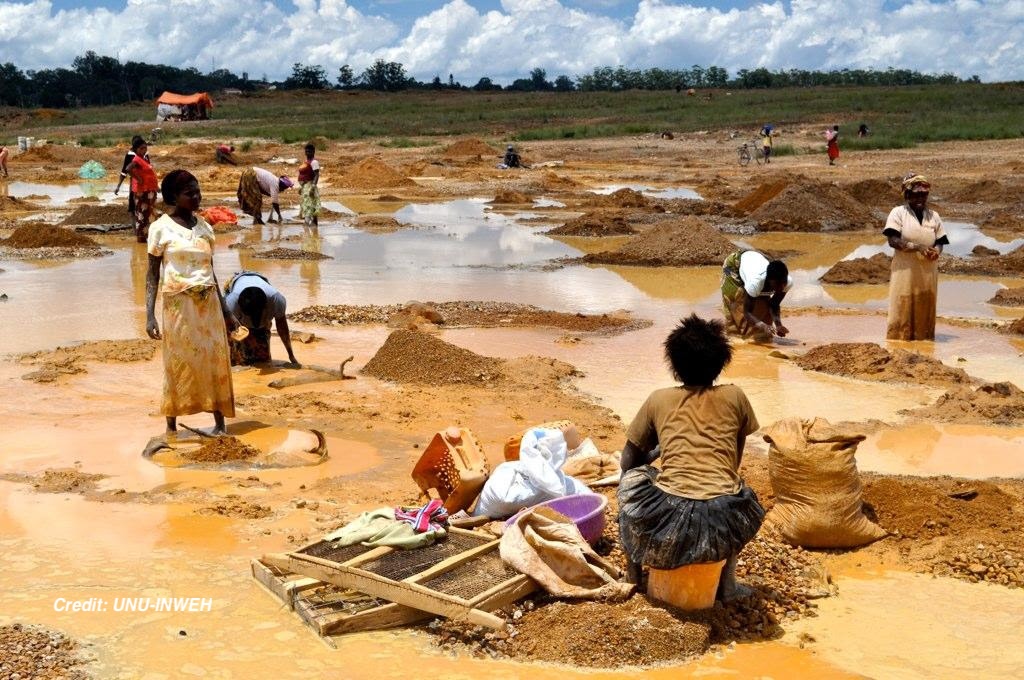
According to the data, agriculture remains the largest sector for child labour, accounting for 61 per cent of all cases, followed by services (27 per cent), like domestic work and selling goods in markets, and industry (13 per cent), including mining and manufacturing.

Asia and the Pacific achieved the most significant reduction in prevalence since 2020, with the child labour rate dropping from 6 per cent to 3 per cent (from 49 million to 28 million children). Although the prevalence of children in child labour in Latin America and the Caribbean stayed the same over the past four years, the total number of children affected dropped from 8 million to about 7 million, the report notes.

Sub-Saharan Africa continues to carry the heaviest burden, accounting for nearly two-thirds of all children in child labour – around 87 million. While prevalence fell from 24 to 22 per cent, the total number has remained stagnant against the backdrop of population growth, ongoing and emerging conflicts, extreme poverty, and stretched social protection systems.

“The world has made significant progress in reducing the number of children forced into labour. Yet far too many children continue to toil in mines, factories or fields, often doing hazardous work to survive,” said Catherine Russell.  “We know that progress towards ending child labour is possible by applying legal safeguards, expanded social protection, investment in free, quality education, and better access to decent work for adults. Global funding cuts threaten to roll back hard-earned gains. We must recommit to ensuring that children are in classrooms and playgrounds, not at work.”

Sustained and increased funding – both global and domestic – is needed more than ever if recent gains are to be maintained, warn the agencies. Reductions in support for education, social protection on, social protection, and livelihoods can push already vulnerable families to the brink, forcing some to send their children to work. Meanwhile, shrinking investment in data collection will make it harder to see and address the issue.

Child labour compromises children’s education, limiting their rights and their future opportunities, and putting them at risk of physical and mental harm. It is also a consequence of poverty and lack of access to quality education, pushing families to send their children to work and perpetuating inter-generational cycles of deprivation.

Boys are more likely than girls to be involved in child labour at every age, but when unpaid household chores of 21 hours or more per week are included, the gender gap reverses, the report notes.

Since 2000, child labour has almost halved, from 246 million to 138 million, yet current rates remain too slow, and the world has fallen short of reaching the 2025 global elimination target. To end it within the next five years, current rates of progress would need to be 11 times faster.

To accelerate progress, UNICEF and ILO are calling for governments to: Invest in social protection for vulnerable households, including social safety nets such as universal child benefits, so families do not resort to child labour.

Strengthen child protection systems to identify, prevent, and respond to children at risk, especially those facing the worst forms of child labour.

Provide universal access to quality education, especially in rural and crisis-affected areas, so every child can learn.

Ensure decent work for adults and youth, including workers’ rights to organize and defend their interests.

Enforce laws and business accountability to end exploitation and protect children across supply chains.

# # # # #

Notes to editors: Explore the data on child labour here. Explore data on children and play here.
Download multimedia content here.

For more information, please contact: Zeina Awad | ILO in Geneva|awadz@ilo.org
ILO Media Team | newsroom@ilo.org; Sara Alhattab | UNICEF in New York | + 1 9179576536 | salhattab@unicef.org   

About the ILO – The International Labour Organization (ILO) is devoted to promoting social justice and internationally recognized human and labour rights, pursuing its founding mission that social justice is essential to universal and lasting peace. The only tripartite U.N. agency, since 1919 the ILO brings together governments, employers and workers of 187 Member States, to set labour standards, and promote social justice and decent work for all.
For more information about the ILO, you can visit www.ilo.org
Follow the ILO on XLinkedInFacebookInstagram, and YouTube

About UNICEF – UNICEF, the United Nations agency for children, works to protect the rights of every child, everywhere, especially the most disadvantaged children and in the toughest places to reach. Across more than 190 countries and territories, we do whatever it takes to help children survive, thrive, and fulfil their potential. For more information about UNICEF and its work, please visit: www.unicef.org. Follow UNICEF on X (Twitter)FacebookInstagram, and YouTube

United Nations journalists – United Nations journalists – United Nations journalists

United Nations News – United Nations News – UN Correspondents Association – UNCA Awards 

Despite progress, child labour still affects 138 million children globally – ILO, UNICEF Read More »

New data shows conflict at historic high as U.S. signals retreat from world stage

Note: A new report from the Peace Research Institute Oslo (PRIO) finds that 2024 marked a grim new record: the highest number of state-based armed conflicts in over seven decades. The press release below reveals more of the latest global conflict trend figures.

Oslo, 11 June 2025 – The world is experiencing a surge in violence not seen since the post-World War II era. 2024 marked a grim new record: the highest number of state-based armed conflicts in over seven decades.

“This is not just a spike – it’s a structural shift. The world today is far more violent, and far more fragmented, than it was a decade ago,” warned Siri Aas Rustad, Research Director at the Peace Research Institute Oslo (PRIO) and lead author of the report. “Now is not the time for the United States – or any global power – to retreat from international engagement. Isolationism in the face of rising global violence would be a profound mistake with long-term human life consequences.”

The report is based on data from the Uppsala Conflict Data Program. It shows that while the number of battle-related deaths in 2024 held steady at approximately 129,000 – matching the devastating toll of 2023 – this level of violence was far above the average for the past three decades. 2024 was the fourth most deadly year since the Cold War ended in 1989.

Two major wars dominated the battlefield: Russia’s continued invasion of Ukraine claimed an estimated 76,000 lives, while the war in Gaza killed 26,000. But these headline conflicts are only part of the picture. What is increasingly alarming is the multiplication of conflicts within individual countries. More than half of all conflict-affected states now face two or more separate state-based conflicts, which are internal conflicts where the government is one of the warring parties. In nine countries, there were three or more state-based conflicts. This reflects a deepening complexity in global conflict dynamics – where state fragility, transnational actors and local grievances feed into overlapping crises that are harder to contain, let alone resolve.

“Conflicts are no longer isolated. They’re layered, transnational and increasingly difficult to end,” said Rustad. “It is a mistake to assume the world can look away. Whether under President Trump or any future administration, abandoning global solidarity now would mean walking away from the very stability the U.S. helped build after 1945.”

The data also identified a rise in militant group activity as a key driver of new and sustained violence. While the Islamic State (IS) remained active in at least 12 countries, other groups like Jama’at Nusrat al-Islam wal-Muslimin (JNIM) expanded its footprint. JNIM operated in five West African countries in 2024.

Africa remained the most conflict-affected region last year, with 28 state-based conflicts recorded, nearly double the number from a decade earlier. Asia followed with 17, the Middle East with 10, Europe with 3 and the Americas with 2.

“Our analysis shows that the global security landscape is not improving, it’s fracturing. And without sustained international engagement, the risks to civilians, regional stability and international order will only deepen,” warned Rustad.

For more information or to arrange an interview:

  • Contact Michelle Delaney, Communication Director at the Peace Research Institute Oslo (PRIO) | michelle@prio.org | mobile 0047 941 65 579.
  • Click here to download the whole PRIO reportConflict Trends: A Global Overview, 1946-2024.
  • The 2024 Uppsala University statistics will be published in the July issue of Journal of Peace Research.

United Nations journalists – United Nations journalists – United Nations journalists

United Nations News – United Nations News – UN Correspondents Association – UNCA Awards 

New data shows conflict at historic high as U.S. signals retreat from world stage Read More »

UN calls for an end to ocean “plunder” as ocean summit opens in France

Note: Official representatives from 120 countries, including 50 heads of state and government, and organizations attended the opening of the UN Ocean Conference in Nice, France. A major objective of the five-day conference is to try make the landmark High Seas Treaty adopted in 2023 into a binding international law in order to safeguard life in the oceans. The following is a press release from the UN.

Nice, France, 9 June 2025 – The 2025 United Nations Ocean Conference, co-hosted by the Governments of France and Costa Rica, opened today in Nice with strong calls to accelerate action and mobilize all actors to conserve and sustainably use the ocean.

“I urge all countries to come forward with bold pledges,” United Nations Secretary-General António Guterres said in his opening remarks to the Conference this morning. “We live in an age of turmoil, but the resolve I see here gives me hope,” he said. “Hope that we can turn the tide.”

President Emmanuel Macron of France, also addressing the opening ceremony, said, “we need to revitalize multilateralism behind the UN Secretary General,” adding that, “the only way to meet that challenge, is to mobilize all actors, heads of state and government speaking here, but also scientists.”

President Rodrigo Chaves Robles of Costa Rica stated that “this summit must be remembered as the time when the world understood that looking after the ocean is not simply an option. Rather, it is a moral, economic, and indeed we need minimum protection.”

Bringing together world leaders, scientists, private sector representatives, civil society, Indigenous Peoples and local communities, the high-level gathering underscores the ocean’s vital role in regulating the climate, sustaining food security and livelihoods, and preserving biodiversity.

The ocean is under growing pressure from climate change and human activity, with record heat severely impacting marine life, and escalating threats from pollution, overfishing and biodiversity loss pushing marine ecosystems to the brink.

The Conference is expected to adopt an intergovernmentally negotiated political declaration, which, along with a registry of voluntary commitments from across sectors, will be referred to as the Nice Ocean Action Plan – outcomes aimed at catalyzing urgent, inclusive, and science-based action to safeguard the ocean for present and future generations.

“The time for incremental progress is over. We need billions, not millions, in investment. We need binding commitments that survive political transitions and economic pressures,” United Nations Under-Secretary-General Li Junhua, the Conference Secretary-General said at the opening.

Key issues under discussion during the five-day conference include: The Marine Biodiversity Treaty (BBNJ Agreement): Advancing ratifications of the Agreement under the United Nations Convention on the Law of the Sea on the Conservation and Sustainable Use of Marine Biological Diversity of Areas beyond National Jurisdiction, which was adopted in 2023 and covers nearly two-thirds of the ocean. Entry into force of the Agreement is critical for the health and resilience of the ocean and can make vital contributions to achieving Sustainable Development Goal 14. A Special Treaty Event held later today, provides an opportunity for States to sign or ratify the Agreement.

Sustainable Fisheries: Ending illegal, unreported, and unregulated fishing practices, while encouraging science-based, community-led approaches to rebuild fish stocks and minimize ecosystem damage.

Marine Protected Areas: Advancing progress on the Kunming-Montreal Global Biodiversity Framework target of protecting 30% of the ocean by 2030.

Decarbonizing Maritime Transport: Accelerating the transition to low- and zero-emission fuels and electrifying port infrastructure, recognizing early leadership from both national governments and the maritime industry.

Plastic Pollution: Generating renewed political will and momentum for tackling plastic pollution, with negotiations resuming in August 2025.

Financing: Unlocking new finance streams — including philanthropic capital, blended finance, and public-private partnerships — to support coastal resilience and sustainable blue economies.

Science and Governance: Underscoring evidence-based policymaking and the role of cutting-edge research, observation systems, and Indigenous knowledge in shaping effective ocean governance.

SDG Media Zone: The SDG Media Zone takes the conversation on advancing the Sustainable Development Goals out of the policy sphere and into the public discourse through a live format of interviews and panel discussions.

The SDG Media Zone at the UN Ocean Conference will bring together UN principals, scientists, industry leaders and representatives from a diverse group of stakeholders to advance solutions and initiatives that address the global challenges facing the ocean.

About the UN Ocean Conference: The third United Nations Ocean Conference, co-hosted by the Governments of France and Costa Rica, takes place during the UN Decade of Ocean Science, and follows major global agreements such as the Marine Biodiversity Treaty and the Kunming-Montreal Biodiversity Framework. UN Under-Secretary-General for Economic and Social Affairs, Mr. Li Junhua, serves as the Conference Secretary-General. The UN Legal Counsel, Ms. Elinor Hammarskjöld, serves as the Special Adviser to the Presidents of the Conference on oceans and legal matters.

The Conference comes at a critical time for ocean health, aiming to address threats such as climate change, overfishing, pollution, and biodiversity loss.

The programme includes plenaries and ten Ocean Action Panels that will bring together governments, the UN system, civil society, scientists, youth, Indigenous Peoples, and the private sector. The Conference is expected to deliver the Nice Ocean Action Plan — a shared commitment to restoring and protecting the ocean.

Fifty-five Heads of State and Government, together with thousands of young people, business leaders, scientists and civil society representatives, are participating in the Conference including more than 450 side events.

Key links:

Media Contacts – UN Department of Global Communications:Martina Donlon | donlon@un.org; Alexandra del Castello | alexandra.delcastello@un.org; Martin Samaan | samaanM@un.org

Social Media: Please follow us on the Ocean Conference and ocean issues, using the main hashtag: #SaveOurOcean.

On Facebook: United Nations, Global GoalsUN, DESA, Sustainable Development

On Twitter: @UN,  @GlobalGoalsUN, @UNDESA, @SustDev

United Nations journalists – United Nations journalists – United Nations journalists

United Nations News – United Nations News – UN Correspondents Association – UNCA Awards 

UN calls for an end to ocean “plunder” as ocean summit opens in France Read More »

Chief Economists Warn Global Growth Under Strain from Trade Policy Shocks and AI Disruption

Chief Economists Warn Global Growth Under Strain from Trade Policy Shocks and AI Disruption
A majority of surveyed economists see current US economic policy as having a lasting global impact, with 87% expecting it to delay strategic business decisions and heighten recession risks. The growth outlook is divided, with weak prospects in North America, resilience in Asia-Pacific and cautious optimism in Europe. Public debt concerns are mounting as defence spending rises, with 86% of chief economists expecting increased government borrowing. Artificial intelligence is expected to drive growth, but 47% anticipate net job losses. The following is a press release from the World Economic Forum.

Geneva, Switzerland, 28 May 2025 – The global economic outlook has worsened since the start of the year, as rising economic nationalism and tariff volatility fuel uncertainty and risk stalling long-term decision-making, according to a World Economic Forum report released today. Read the report here

The latest Chief Economists Outlook reveals that a strong majority (79%) of surveyed economists view the current geoeconomic developments as signs of a significant structural shift for the global economy rather than a temporary disruption.

“Policymakers and business leaders must respond to heightened uncertainty and trade tensions with greater coordination, strategic agility and investment in the growth potential of transformative technologies like artificial intelligence,” said Saadia Zahidi, Managing Director, World Economic Forum. “These steps are essential for navigating today’s economic headwinds and securing long-term resilience and growth.”

Geopolitical and policy uncertainty clouds outlook
Global uncertainty is seen as exceptionally high by 82% of the chief economists. While a narrow majority (56%) expect conditions to improve over the next year, concerns persist. Nearly all the chief economists (97%) place trade policy among the areas of highest uncertainty, followed by monetary policy (49%) and fiscal policy (35%). This uncertainty is expected to weigh on key economic indicators, including trade volumes (70%), GDP growth (68%) and foreign direct investment (62%).

Most chief economists (87%) anticipate that businesses will respond to uncertainty by delaying strategic decisions, increasing recession risks. Debt sustainability is also a rising concern, cited by 74% of respondents for both advanced and developing economies. An overwhelming majority (86%) expect governments to meet rising defence spending needs through increased borrowing, potentially crowding out investment in public services and infrastructure.

Growth expectations diverge sharply by region
In early April, at the peak of uncertainty, most chief economists (77%) were anticipating weak or very weak growth through 2025 in the US, alongside high inflation (79%) and a weakening dollar (76%). By contrast, they were cautiously optimistic about Europe’s prospects for the first time in years, mainly because of expectations of fiscal expansion, notably in Germany. The outlook for China remains muted, and the chief economists were divided over whether it will reach its target of 5% GDP growth this year. Optimism remains highest for South Asia, where 33% expect strong or very strong growth this year.

AI as a growth catalyst but potential economic risk
Artificial intelligence (AI) is poised to drive the next wave of economic transformation, unlocking significant growth potential but also introducing serious risks. Nearly half (46%) of chief economists expect AI to deliver a modest global real GDP boost of 0-5 percentage points over the next decade, with a further 35% projecting gains of 5-10 points. Key growth drivers include task automation (68%), accelerated innovation (62%) and worker augmentation (49%). Despite its potential, concerns persist: 47% expect net job losses over the next decade, compared to just 19% who expect gains.

Above all, respondents highlighted the misuse of AI for disinformation and societal destabilization as the top risk to the economy (53%). Other key risks include rising concentration of market power (47%) and disruption of existing business models (44%).

To fully harness AI’s potential, the chief economists emphasized the need for bold action from both governments and businesses. For governments, top priorities include investing in AI infrastructure (89%), promoting adoption across key industries (86%), facilitating AI talent mobility (80%), and investing in upskilling and redeployment (75%). For businesses, the focus is on adapting core processes to integrate AI (95%), reskilling employees (91%) and training leadership to steer AI-driven transformation (83%).

About the Chief Economists Outlook
The report builds on extensive consultations and surveys with chief economists from the public and private sectors, organized by the World Economic Forum’s Centre for the New Economy and Society. This latest survey was conducted in early April 2025. The report supports the Forum’s Future of Growth Initiative, aiming to foster dialogue and actionable pathways towards sustainable and inclusive economic growth.

Notes to editors
Read Forum Stories also in Spanish | Mandarin | Japanese
Learn about the Forum’s impact
Follow the Forum on social media: X | Instagram | LinkedIn | Facebook | TikTok | Weibo | Threads | WhatsApp | YouTube | WeChat
Check out the Forum’s Strategic Intelligence Platform and Transformation Maps
Watch Forum videos at wef.ch/videos | YouTube
Get Forum podcasts at wef.ch/podcasts | YouTube
Subscribe to Forum news releases

The World Economic Forum, committed to improving the state of the world, is the International Organization for Public-Private Cooperation. The Forum engages the foremost political, business and other leaders of society to shape global, regional and industry agendas. (www.weforum.org).

United Nations correspondent journalists – United Nations correspondent journalists – United Nations journalism articles – United Nations journalism articles – United Nations News – UNCA Awards

Chief Economists Warn Global Growth Under Strain from Trade Policy Shocks and AI Disruption Read More »

WHO adopts historic Pandemic Agreement to make the world more equitable and safer from future pandemics

WHO: Agreement’s adoption follows three years of intensive negotiation launched due to gaps and inequities identified in national and global COVID-19 response. Agreement boosts global collaboration to ensure stronger, more equitable response to future pandemics. Next steps include negotiations on Pathogen Access and Benefits Sharing system. Following is a press release from WHO.

Geneva, 20 May, 2025 – Member States of the World Health Organization (WHO) today formally adopted by consensus the world’s first Pandemic Agreement. The landmark decision by the 78th World Health Assembly culminates more than three years of intensive negotiations launched by governments in response to the devastating impacts of the COVID-19 pandemic, and driven by the goal of making the world safer from – and more equitable in response to – future pandemics.

“The world is safer today thanks to the leadership, collaboration and commitment of our Member States to adopt the historic WHO Pandemic Agreement,” said Dr Tedros Adhanom Ghebreyesus, WHO Director-General. “The Agreement is a victory for public health, science and multilateral action. It will ensure we, collectively, can better protect the world from future pandemic threats. It is also a recognition by the international community that our citizens, societies and economies must not be left vulnerable to again suffer losses like those endured during COVID-19.”  

Governments adopted the WHO Pandemic Agreement today in a plenary session of the World Health Assembly, WHO’s peak decision-making body. The adoption followed yesterday’s approval of the Agreement by vote (124 in favour, 0 objections, 11 abstentions) in Committee by Member State delegations.

“Starting during the height of the COVID-19 pandemic, governments from all corners of the world acted with great purpose, dedication and urgency, and in doing so exercising their national sovereignty, to negotiate the historic WHO Pandemic Agreement that has been adopted today,” said Dr Teodoro Herbosa, Secretary of the Philippines Department of Health, and President of this year’s World Health Assembly, who presided over the Agreement’s adoption. “Now that the Agreement has been brought to life, we must all act with the same urgency to implement its critical elements, including systems to ensure equitable access to life-saving pandemic-related health products. As COVID was a once-in-a-lifetime emergency, the WHO Pandemic Agreement offers a once-in-a-lifetime opportunity to build on lessons learned from that crisis and ensure people worldwide are better protected if a future pandemic emerges.”

The WHO Pandemic Agreement sets out the principles, approaches and tools for better international coordination across a range of areas, in order to strengthen the global health architecture for pandemic prevention, preparedness and response. This includes through the equitable and timely access to vaccines, therapeutics and diagnostics.

Regarding national sovereignty, the Agreement states that: “Nothing in the WHO Pandemic Agreement shall be interpreted as providing the Secretariat of the World Health Organization, including the Director-General of the World Health Organization, any authority to direct, order, alter or otherwise prescribe the national and/or domestic law, as appropriate, or policies of any Party, or to mandate or otherwise impose any requirements that Parties take specific actions, such as ban or accept travellers, impose vaccination mandates or therapeutic or diagnostic measures or implement lockdowns.”

The resolution on the WHO Pandemic Agreement adopted by the World Health Assembly sets out steps to prepare for the accord’s implementation. It includes launching a process to draft and negotiate a Pathogen Access and Benefit Sharing system (PABS) through an Intergovernmental Working Group (IGWG). The result of this process will be considered at next year’s World Health Assembly.

Once the Assembly adopts the PABS annex, the WHO Pandemic Agreement will then be open for signature and consideration of ratification, including by national legislative bodies. After 60 ratifications, the Agreement will enter into force.

In addition, Member States also directed the IGWG to initiate steps to enable setting up of the Coordinating Financial Mechanism for pandemic prevention, preparedness and response, and the Global Supply Chain and Logistics Network (GSCL) to “enhance, facilitate, and work to remove barriers and ensure equitable, timely, rapid, safe, and affordable access to pandemic-related health products for countries in need during public health emergencies of international concern, including pandemic emergencies, and for prevention of such emergencies.”

According to the Agreement, pharmaceutical manufacturers participating in the PABS system will play a key role in equitable and timely access to pandemic-related health products by making available to WHO “rapid access targeting 20% of their real time production of safe, quality and effective vaccines, therapeutics, and diagnostics for the pathogen causing the pandemic emergency.”  The distribution of these products to countries will be carried out on the basis of public health risk and need, with particular attention to the needs of developing countries.

The WHO Pandemic Agreement is the second international legal agreement negotiated under Article 19 of the WHO Constitution, the first being the WHO Framework Convention on Tobacco Control, which was adopted in 2003 and entered into force in 2005.

WHO Media Contact: mediainquiries@who.int

United Nations correspondent journalists – United Nations correspondent journalists – United Nations journalism articles – United Nations journalism articles – United Nations News – UNCA Awards 
WHO adopts historic Pandemic Agreement to make the world more equitable and safer from future pandemics Read More »

UN Peacekeeping Ministerial in Berlin Brings New Commitments to Strengthen Peacekeeping Operations

Note: Official representatives from more than 130 countries and international organizations attended a ministerial conference on UN peacekeeping in Berlin (13-14 May) and pledged military, technology and political support as peacekeeping operations are under serious strain, including fund shortage. Following is a joint press release.

Berlin, Germany, 14 May 2025 – The United Nations Peacekeeping Ministerial 2025 Berlin concluded today. More than 130 Member States and international partners – over a thousand participants in total – came together to reaffirm their support for UN peacekeeping and to announce concrete pledges aimed at enhancing the effectiveness and adaptability of peace operations in the face of evolving global challenges.

Hosted by the Government of Germany, the two-day high-level meeting marked a significant milestone in the ongoing efforts to strengthen Member State support and help shape the future of UN Peacekeeping. The Ministerial focused on the Future of Peacekeeping, reflecting the need for innovative approaches to address complex conflicts, leverage emerging technologies, and address threats such as mis- and disinformation.

“In trouble spots around the world, Blue Helmets can mean the difference between life and death. Now more than ever, the world needs the United Nations. And the United Nations needs peacekeeping that is fully equipped for today’s realities and tomorrow’s challenges,” said United Nations Secretary-General António Guterres in his opening remarks.

“We welcome Member States’ political statements of support for peacekeeping as well as their pledges of military and police capabilities, new partnerships and technological support. This meeting is also about something more fundamental: the future of peacekeeping itself,” he added.

“In an interconnected world, no nation can achieve peace and security for its citizens on its own. In the past two days, more than 130 UN member states have come together in Berlin, determined to make progress towards this goal together. We all agree that setting up strong and effective peacekeeping missions is our joint responsibility. We want to tailor future missions to the exact needs of the host countries and increase their acceptance and effectiveness. This is the way forward in a world in which peacekeeping is more important now than ever before, but where the challenges are greater than at any time in the past. The participants have lived up to this challenge by making many very significant contributions. Germany’s support for the UN and its peacekeeping missions remains unwavering. We are committed to standing up for international peace and security,” said Johann Wadephul, Minister of Foreign Affairs of the Federal Republic of Germany.

Meanwhile, announcing his country’s pledged contributions worth 82 million Euros to UN Peacekeeping, Boris Pistorius, Minister of Defence of the Federal Republic of Germany, said: “I am grateful to all partners, who have come to Berlin to make significant pledges to ensure efficient global Peacekeeping Missions. Germany continues to be a steadfast supporter of UN Peacekeeping and has pledged contributions worth 82 million Euros. In addition, we will continue our support to missions and partners with training and equipment. Our goal was to focus on new and innovative pledges, ranging from renewable energy technologies to medical transport drones to the protection from improvised explosive devices. We remain committed to supporting the three UN Peacekeeping Missions that the German Armed Forces currently deploy to in South Sudan, Lebanon and Western Sahara.”

Key outcomes:

A total of 74 Member States made pledges including:

·        Pledges of military and police units – 53 Member States pledged uniformed capabilities, including 88 military and police units, as well as various critical capabilities, airlift, individual experts, staff officers and individual police officers.

·        Specialized training – 59 Member States pledged specialized trainings on critical issues such as peacekeeping-intelligence, protection of civilians, gender and the prevention of sexual exploitation and abuse.

·         Technological advancements and data-driven approaches – 18 Member States made pledges related to technological advancements and data-driven approaches to improve mission effectiveness.

·         Women, Peace and Security – 38 Member States made pledges to further implement the Women, Peace and Security agenda, including gender-responsive peacekeeping and women in peacekeeping.

·         Safety and Security – 16 Member States pledged capabilities and projects to enhance the safety and security of peacekeepers.

·         Conduct and accountability – Eleven Member States made pledges related to the conduct and accountability of peacekeepers and UN Peacekeeping’s fight against sexual exploitation and abuse. This response includes targeted contributions to the Trust Fund for victims.

·         Strategic Communications and information integrity – Eight Member States made pledges to support the UN’s Strategic Communications efforts and contribute resources to strengthen information integrity.

BackgroundToday, more than 61,000 military and police peacekeepers from 119 countries and more than seven thousand civilian personnel serve across 11 Peacekeeping Missions.

The Berlin Ministerial is part of a series of high-level meetings aimed at galvanizing political support and generating tangible commitments to improve UN Peacekeeping. It follows previous Ministerial meetings held in Accra (2023), Seoul (2021), New York (2019) Vancouver (2017) and London (2016). The 2025 Ministerial also coincides with the 80th anniversary of the United Nations and the 10-year anniversary of the Leaders’ Summit on Peacekeeping.

More information on the meeting, including statements and the list of pledges, please visit the UN Peacekeeping website and @UNPeacekeeping digital channels. 

For media inquiries and further information, please contact:

·         Department of Peace Operations: Sophie Boudre: boudre@un.org; Hector Calderon: hector.calderon@un.org

·         Federal Republic of Germany: Anna Laura Vitzinger, German Foreign Office:  presse@diplo.de; and Sonja Momberg, German Ministry of Defence: sonjamomberg@bmvg.bund.de

 United Nations correspondent journalists – United Nations correspondent journalists – United Nations journalism articles – United Nations journalism articles – United Nations News – UNCA

UN Peacekeeping Ministerial in Berlin Brings New Commitments to Strengthen Peacekeeping Operations Read More »